Resistor Concept: Series & Parallel Circuits

  • Context: High School 
  • Thread starter Thread starter IvaNMK
  • Start date Start date
  • Tags Tags
    Concept Resistor
Click For Summary

Discussion Overview

The discussion centers on the role of resistors in series and parallel circuits, exploring their effects on current and voltage. Participants are examining concepts related to Ohm's law, the behavior of lightbulbs as resistors, and the implications of resistance in circuit design.

Discussion Character

  • Exploratory
  • Technical explanation
  • Conceptual clarification
  • Debate/contested
  • Mathematical reasoning

Main Points Raised

  • Some participants suggest that resistors reduce both current and voltage in a series circuit, while others clarify that current remains constant through resistors in series.
  • There is a question about whether the current before passing through a resistor is larger than after, with some asserting that current is equivalent throughout a series circuit.
  • Participants discuss the brightness of lightbulbs in relation to resistor placement, with one noting that a lightbulb acts as a resistor.
  • Some argue that while resistors reduce voltage, they do not reduce current, leading to confusion about the relationship between voltage and current in a circuit.
  • There is mention of voltage drops across resistors and the cumulative effect of multiple resistors on total voltage in a circuit.
  • One participant references a textbook definition of resistance, emphasizing its role in limiting current flow and generating heat.
  • Discussion includes the formula V = IR and its implications for understanding current and voltage in circuits.

Areas of Agreement / Disagreement

Participants express differing views on the effects of resistors on current and voltage, with no consensus reached on whether resistors reduce current or only voltage. The discussion remains unresolved regarding the implications of these concepts in practical applications.

Contextual Notes

Participants reference various aspects of circuit theory, including Ohm's law and the behavior of resistors, but there are unresolved questions about the application of these principles in specific scenarios.

IvaNMK
Messages
13
Reaction score
0
~~Resistor Concept~~

Hi. I am having trouble with understanding the resistor. What does a resistor do in SERIES or in PARALLEL circuit?

My understanding: ( please correct me if i am wrong!)

In series circuit, Resistor is a device that reduce the current in the circuit. And according to ohm's law, V = IR, when the current is reduced, the voltage will also be reduced. So I think resistor will reduce BOTH voltage and current. And if the voltage doesn't change, then what is the point of connect a voltmeter across a resistor, Right? So I think BOTH voltage and current are reduced by a resistor.

Here comes another problem. If a resistor in series would reduce current and/or voltage, will the current BEFORE passing thru the resistor be larger than the current AFTER passing thru the resistor ? Or the current will only change at the point where the resistor is put?

Example:

Compare

How will the brightness of 2 lightbulb change if i put a resistor bewteen 2 identical lightbulbs?
How will the brightness of 2 lightbulb change if i put a resistor NEXT TO 2 identical lightbulbs? ( NOT BEWTEEN )

Thx for helping

P.S. Lightbulb similar to this one below.
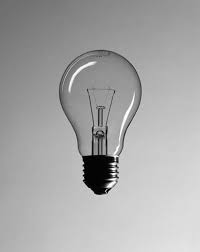
Breaking%2520the%2520lightbulb%2520Movie.jpg
 
Physics news on Phys.org


IvaNMK said:
In series circuit, Resistor is a device that reduce the current in the circuit. And according to ohm's law, V = IR, when the current is reduced, the voltage will also be reduced. So I think resistor will reduce BOTH voltage and current. And if the voltage doesn't change, then what is the point of connect a voltmeter across a resistor, Right? So I think BOTH voltage and current are reduced by a resistor.

A resistor is a device that opposes current by reducing the voltage across it. If you look at a series circuit (a bunch of resistors and battery in series) you will see a voltage drop across each resistor, but the same current through each resistor.

IvaNMK said:
If a resistor in series would reduce current and/or voltage, will the current BEFORE passing thru the resistor be larger than the current AFTER passing thru the resistor ? Or the current will only change at the point where the resistor is put?

No, current is equivalent.

IvaNMK said:
How will the brightness of 2 lightbulb change if i put a resistor bewteen 2 identical lightbulbs?
How will the brightness of 2 lightbulb change if i put a resistor NEXT TO 2 identical lightbulbs? ( NOT BEWTEEN )


First, a lightbulb IS a resistor.

For resistors in series, the current is the same, while voltage will be different (less for each proceeding resistor).

For resistors in parallel, voltage is equivalent, while current MAY differ depending on the resistance of each "side."


Thank you

S_Happens said:
A resistor is a device that opposes current by reducing the voltage across it. If you look at a series circuit (a bunch of resistors and battery in series) you will see a voltage drop across each resistor, but the same current through each resistor.


What do you mean by opposes current? Push the current back?
So resistor will reduce voltage, but not current?

S_Happens said:
First, a lightbulb IS a resistor.

For resistors in series, the current is the same, while voltage will be different (less for each proceeding resistor).

So will the voltage be lesser after it pass one or several resistors? Keep decreasing?


IvaNMK said:
What do you mean by opposes current? Push the current back?
So resistor will reduce voltage, but not current?

Let's just stick to the concept and simply clarify your original ideas, as you weren't far off base to begin with. The equation V=IR can tell us many things, but it has to be applied correctly.

You deduced, correctly, that due to V=IR a resistor that reduces voltage also reduces current. Only when you look at the entire circuit, does this really apply. An increased resistance in the circuit will mean less current through the ENTIRE circuit, at a constant value (using a single loop circuit). What I mean to say is that in a simple circuit the current will be the same throughout.

If you want to apply the formula to a single resistor, then you must realize that the current is constant through the resistor. This means that the voltage must change indirectly with resistance (before the resistor there is none, and after the resistor it has seen the full resistance).

IvaNMK said:
So will the voltage be lesser after it pass one or several resistors? Keep decreasing?

Yes, there will be a voltage drop across every resistor. The sum of the voltage drops is equivalent to the voltage for the entire circuit.


Thank you for helping again!

S_Happens said:
If you want to apply the formula to a single resistor, then you must realize that the current is constant through the resistor. This means that the voltage must change indirectly with resistance (before the resistor there is none, and after the resistor it has seen the full resistance).

I don't quite understand this part. Do you mean voltage drop?
So if I have a given voltage and resistance, i can calculate the current through the resistor and that current is the same throughout the resistor?

"voltage must change indirectly with resistance"

- so if I constant current and resistance are given, then voltage will be different across the resistor? "before the resistor there is none, what is none? voltage?

thanks


Ok this what my book says about resistance:
"The principal applications of resistors are to limit the flow of current and, in certain cases, to generate heat."

The formula that you have V = IR I think you mean by conductance which has a symbol of G which is expressed my this formula:

G = \frac{I}{R}

1 \Omega is equivalent to 1A of current in a material when 1V is applied across the material. Voltage is the potential energy in electrical terms, but current is the movement of electrons in the wire where a resistor opposes this current.

Most of this I derived this from one of my dad's old books of electricity.
 

Similar threads

  • · Replies 11 ·
Replies
11
Views
2K
  • · Replies 38 ·
2
Replies
38
Views
6K
  • · Replies 21 ·
Replies
21
Views
4K
  • · Replies 16 ·
Replies
16
Views
4K
  • · Replies 7 ·
Replies
7
Views
3K
  • · Replies 52 ·
2
Replies
52
Views
4K
  • · Replies 57 ·
2
Replies
57
Views
14K
  • · Replies 6 ·
Replies
6
Views
5K
  • · Replies 3 ·
Replies
3
Views
2K
  • · Replies 5 ·
Replies
5
Views
2K