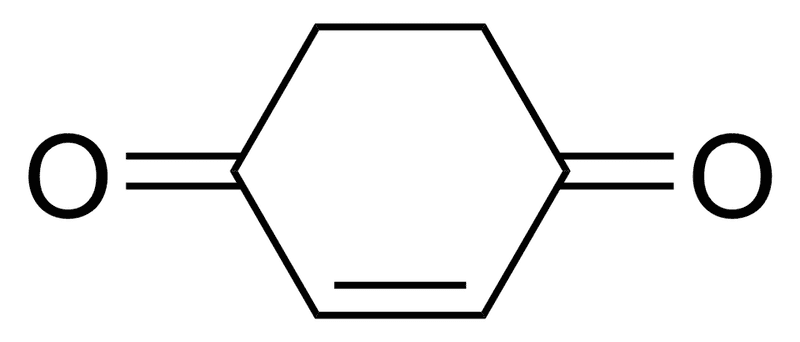
What will be the % of Enol form of this compound?

  • Thread starter Thread starter utsav55
  • Start date Start date
  • Tags Tags
    Form
Click For Summary

Discussion Overview

The discussion revolves around the percentage of the enol form of a specific compound, with participants debating the stability of the keto versus enol forms. The scope includes theoretical considerations of tautomerism and aromaticity.

Discussion Character

  • Debate/contested
  • Conceptual clarification
  • Mathematical reasoning

Main Points Raised

  • One participant suggests that the enol form is 1% due to the keto form being aromatic and thus more stable, despite another participant asserting that the answer is 99%.
  • Another participant questions the definition of aromaticity in this context.
  • A different viewpoint proposes that the enol form could be 99+% because it leads to the formation of an aromatic structure.
  • A participant introduces the Gibbs free energy relationship to explain how small energy differences can significantly affect the percent composition of species in equilibrium, citing that aromatic stabilization energies are substantial.

Areas of Agreement / Disagreement

Participants express differing opinions on the stability and percentage of the enol form, indicating that multiple competing views remain without a consensus.

Contextual Notes

There are unresolved assumptions regarding the definitions of aromaticity and the specific compound in question, as well as the implications of Gibbs free energy on the equilibrium percentages.

utsav55
Messages
14
Reaction score
0
What will be the % of Enol form of this compound?

99% or 1%? Also give reason.

a1pdg9.png


Thanks
 
Chemistry news on Phys.org
Try to draw enol form(s).

If it is a homework question (and it surely looks like one), you have asked in the wrong forum.

--
methods
 
It is not homework, its a doubt.

I think, it is 1% as Keto form is Aromatic and hence more stable, but the answer is 99%.
 
What is the definition of aromatic, in this case?
 
I was going to say 99+% because in the enol form, you have the formation of the aromatic structure.
 
That's why I asked to draw enolic form, it should be obvious :smile:

--
methods
 
When calculating the percent of a certain species in solution obtained in a completely reversible reaction (like keto-enol tautomerism) it is useful to remember the relationship between the Gibbs free energy of the process and chemical equilibrium.

Namely

DeltaG = -RT ln(K)

This equation shows us that small differences in energy can have profound changes in percent composition. For stereoisomers (gauche- and anti-, for example) of substituted cyclohexanes, free energy differences of only 2kcal/mol results in >95% of the more stable isomer. A difference of only 4kcal/mol results in >99%.

Aromatic stabilization energies for benzene are on the order of 20 to 40 kcal/mol...
 

Similar threads

  • · Replies 1 ·
Replies
1
Views
1K
  • · Replies 4 ·
Replies
4
Views
8K
  • · Replies 3 ·
Replies
3
Views
1K
  • · Replies 4 ·
Replies
4
Views
2K
Replies
1
Views
2K
  • · Replies 2 ·
Replies
2
Views
3K
  • · Replies 3 ·
Replies
3
Views
2K
  • · Replies 5 ·
Replies
5
Views
2K
  • · Replies 2 ·
Replies
2
Views
2K
Replies
5
Views
3K