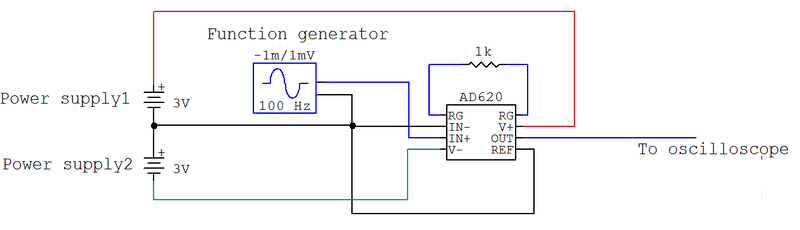
Discussion Overview
The discussion revolves around the potential causes of damage to the AD620AN instrument amplifiers. Participants explore various factors that may contribute to the failure of these ICs, including power supply issues, electrostatic discharge (ESD), and circuit design considerations. The scope includes troubleshooting techniques and considerations for handling sensitive electronic components.
Discussion Character
- Exploratory
- Technical explanation
- Debate/contested
Main Points Raised
- One participant reports that five out of six AD620AN ICs were damaged after initial proper functioning, raising the question of why this occurred.
- Another participant suggests grounding issues related to oscilloscope connections could lead to current flowing through the circuit, potentially damaging the ICs.
- Concerns are raised about power supply transients during powerup or powerdown, which could cause overvoltage conditions that damage the ICs.
- ESD is proposed as a possible cause of latchup and damage, particularly in low humidity environments where static buildup is more likely.
- Participants discuss the importance of grounding oneself before handling sensitive components to prevent ESD damage.
- One participant notes that the high input impedance of the AD620AN may make it more susceptible to ESD and latchup conditions.
- Suggestions are made to use resistors to prevent floating inputs, which could lead to circuit instability and potential damage.
- There is mention of the potential for RF noise or electromagnetic radiation to affect floating inputs, possibly causing overload conditions.
Areas of Agreement / Disagreement
Participants express multiple competing views on the causes of the IC damage, including grounding issues, power supply behavior, ESD, and circuit design. The discussion remains unresolved, with no consensus on the primary cause.
Contextual Notes
Participants highlight the importance of considering environmental factors such as humidity and the design of the circuit to mitigate risks associated with static sensitivity and floating inputs. There are mentions of specific troubleshooting techniques and the need for careful handling of sensitive components.
Who May Find This Useful
Electronics hobbyists, engineers working with sensitive components, and individuals troubleshooting similar issues with instrument amplifiers may find this discussion relevant.