Dash-IQ
- 106
- 1
Wide/Narrow Hysteresis loops, what's the difference?
When calculating the work done to magnetize a ferromagnetic material, calculating the hysteresis loop is the right way?
I know the narrower loop(soft) needs less energy(work) to magnetize or demagnetize it is that true?
That's why it's best to use Soft ferromagnetic materials to minimize losses in energy etc...?
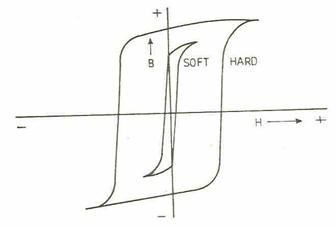
What is the importance of coercivity? It determines the "area" of the hysteresis loop?
Iron = 160 A/m
samarium-cobalt = 3.2 x 10⁶
When calculating the work done to magnetize a ferromagnetic material, calculating the hysteresis loop is the right way?
I know the narrower loop(soft) needs less energy(work) to magnetize or demagnetize it is that true?
That's why it's best to use Soft ferromagnetic materials to minimize losses in energy etc...?
What is the importance of coercivity? It determines the "area" of the hysteresis loop?
Iron = 160 A/m
samarium-cobalt = 3.2 x 10⁶
Last edited:


