mastermechanic
- 107
- 15
Hello everyone, I have not been here for a long time. Now I'm here for a DIY project.
Purpose: I want to design and manufacture my own road bike and ride it as soon as possible.
I want to design nearly all parts on a bike except for the wheels, chain, saddle, cables, maybe shafts and bolts and maybe gears (they would be very hard do design, I've not decided yet).
I've completed my final exams so I can focus on this. I've lots of questions therefore I'll update here frequently. You may ask "Why don't you buy one?" but it's both in my field of interest and I want to test my engineering skills.
First of all, I'm a mechanical engineering student and finished my 2nd year. I've a good practical and technical knowledge of bicycle but not computational technical knowledge. So; if you want to design your own, this thread will be a good guidance for you.
Let's begin:
Firstly: I want to introduce you the type of bicycle I want to design & manufacture.
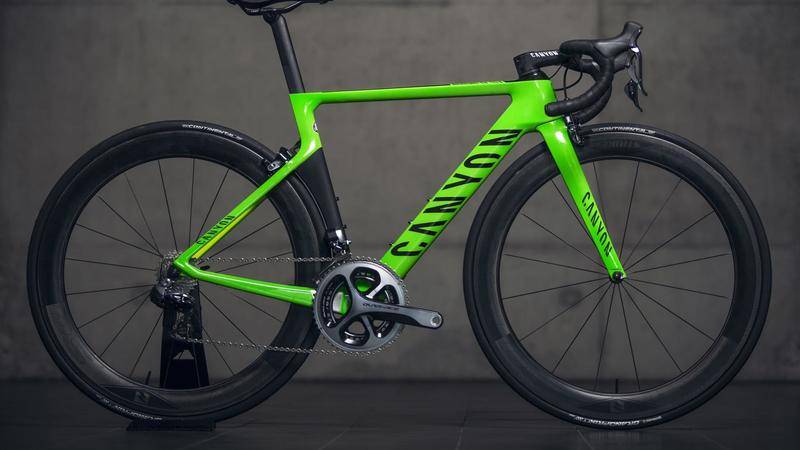
This is a road bike. Simply, no suspension, speed based design, low weight.
Requirements: ------------------------------------------------------------
*Low weight : It should not weight more than 10 - 10.5 kg Generally road bikes are between 8-9 but I'm relatively flexible.
*Design: I love the design in the pic, the top bar should look horizontal, that makes it aggressive.
*Safety: I want to be conservative as much as possible without sacrificing the lightness.
* Comfort: That's a road bike, I'm not expecting too much comfort but it should be ergonomic.
* Material: Carbonfiber is very expensive and not suitable for my purpose, for lightness I will use aluminum on frame (T-6061 or something else, I'll research) and steel for the crank and other power unit parts.
*Life: Of course, fatigue analsis will show us the result but I want to ride this bike safely at least for 5 years.
* Performance: This is where I want to focus, low friction, low drag, low resistance. I should ride it at high speed as much as possible without getting tired. (Now, I've a mountain bike with both suspension and shock absorber, so the significant drop on weight will feel me satisfied in terms of performance.)
------------------------------------------------------------------------------------
(I didnt collect my question on a paper so I will update here when I remember hence, the order of the questions may be confusing but don't worry I will keep here neat and clean.)
Today's Questions:
1-)
Actuator: In such a design the most challenging part is the beginning because it's very hard to find where to start. So my first request will be an advise about that. I thought the dimensions may help:
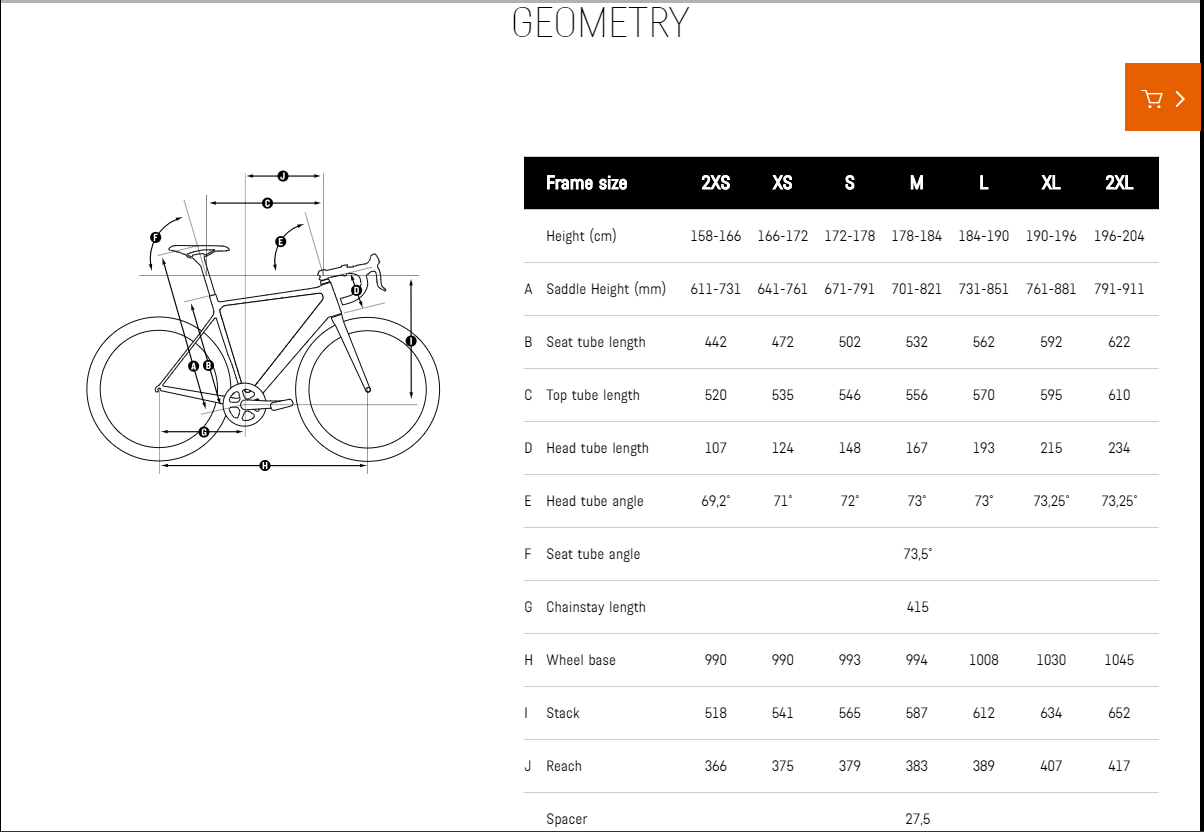
I'm a tall guy, 187 cm ( 6 ft 2 in US system). So I can benefit from this table. That's ok.
I have some sketches (will share on weekend), but my main problem is that where should I being to design analysis. Because during the preliminary design, at some points I have to do static analysis (wihout computer just by hand) therefore I need some rough values which will guide me.
So, the question: In static analysis in which region should I begin to investigate?
My attempt: (Note: Of course this is very inaccurate, no bar and no shafts are rigid, the whole frame will deform together but I'm trying to get rough values about the stresses) (Correct me when I'm wrong)
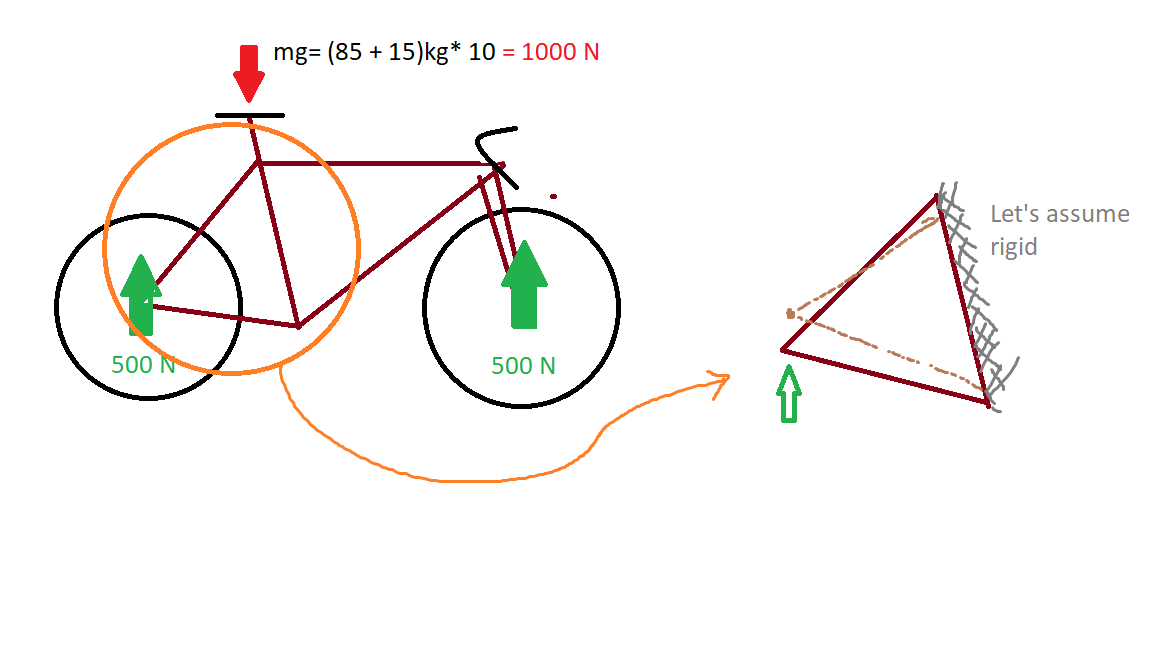
I weight around 85 kg and added addiotional 15 kg for simplicity. So the wheel axles react in 500 N, I assumed the seat bar as rigid then the triangular part is subjected to bending.
But when I do some calculations I get weird bending which are very high compared to yield strength of T-6061 Aluminum due to assumptions.
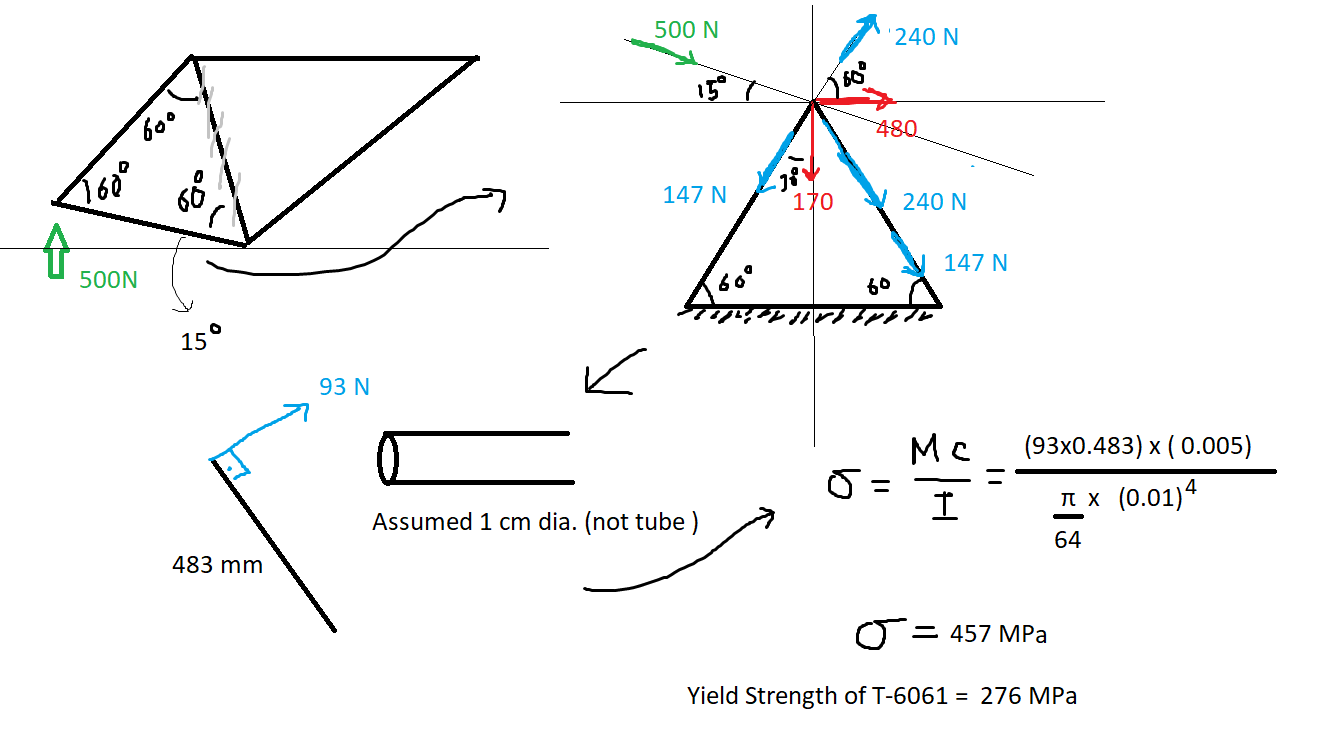
I think my assumptions deviate somewhere if the calculations are correct. I need you help here and I leave it here for now. It's 5:12 am here :)
My first questions is above.
2-)
Computer Analysis
This is a question to be asked in the future but I want to know from now on.
Question 2: What kind of analysis do I have to do to ensure that this bike is safe for me? (Von-mises, fatigue, deflection what else? ) (I have also questions about how I should do these analysis but will ask later)
Purpose: I want to design and manufacture my own road bike and ride it as soon as possible.
I want to design nearly all parts on a bike except for the wheels, chain, saddle, cables, maybe shafts and bolts and maybe gears (they would be very hard do design, I've not decided yet).
I've completed my final exams so I can focus on this. I've lots of questions therefore I'll update here frequently. You may ask "Why don't you buy one?" but it's both in my field of interest and I want to test my engineering skills.
First of all, I'm a mechanical engineering student and finished my 2nd year. I've a good practical and technical knowledge of bicycle but not computational technical knowledge. So; if you want to design your own, this thread will be a good guidance for you.
Let's begin:
Firstly: I want to introduce you the type of bicycle I want to design & manufacture.
This is a road bike. Simply, no suspension, speed based design, low weight.
Requirements: ------------------------------------------------------------
*Low weight : It should not weight more than 10 - 10.5 kg Generally road bikes are between 8-9 but I'm relatively flexible.
*Design: I love the design in the pic, the top bar should look horizontal, that makes it aggressive.
*Safety: I want to be conservative as much as possible without sacrificing the lightness.
* Comfort: That's a road bike, I'm not expecting too much comfort but it should be ergonomic.
* Material: Carbonfiber is very expensive and not suitable for my purpose, for lightness I will use aluminum on frame (T-6061 or something else, I'll research) and steel for the crank and other power unit parts.
*Life: Of course, fatigue analsis will show us the result but I want to ride this bike safely at least for 5 years.
* Performance: This is where I want to focus, low friction, low drag, low resistance. I should ride it at high speed as much as possible without getting tired. (Now, I've a mountain bike with both suspension and shock absorber, so the significant drop on weight will feel me satisfied in terms of performance.)
------------------------------------------------------------------------------------
(I didnt collect my question on a paper so I will update here when I remember hence, the order of the questions may be confusing but don't worry I will keep here neat and clean.)
Today's Questions:
1-)
Actuator: In such a design the most challenging part is the beginning because it's very hard to find where to start. So my first request will be an advise about that. I thought the dimensions may help:
I'm a tall guy, 187 cm ( 6 ft 2 in US system). So I can benefit from this table. That's ok.
I have some sketches (will share on weekend), but my main problem is that where should I being to design analysis. Because during the preliminary design, at some points I have to do static analysis (wihout computer just by hand) therefore I need some rough values which will guide me.
So, the question: In static analysis in which region should I begin to investigate?
My attempt: (Note: Of course this is very inaccurate, no bar and no shafts are rigid, the whole frame will deform together but I'm trying to get rough values about the stresses) (Correct me when I'm wrong)
I weight around 85 kg and added addiotional 15 kg for simplicity. So the wheel axles react in 500 N, I assumed the seat bar as rigid then the triangular part is subjected to bending.
But when I do some calculations I get weird bending which are very high compared to yield strength of T-6061 Aluminum due to assumptions.
I think my assumptions deviate somewhere if the calculations are correct. I need you help here and I leave it here for now. It's 5:12 am here :)
My first questions is above.
2-)
Computer Analysis
This is a question to be asked in the future but I want to know from now on.
Question 2: What kind of analysis do I have to do to ensure that this bike is safe for me? (Von-mises, fatigue, deflection what else? ) (I have also questions about how I should do these analysis but will ask later)
Attachments


