yjl
- 8
- 0
Hi all,
I have attached an image of a page out of the book I am using for context. The blue arrow in Figure 12-3 describes the motion of the particle. I figured the net force would need to be in the same direction, but apparently the net force opposes the motion. So, in Figure 12-3 the pressure at the top of the particle is higher than the pressure at the bottom (P + dP versus P). I am wondering why this is the case.
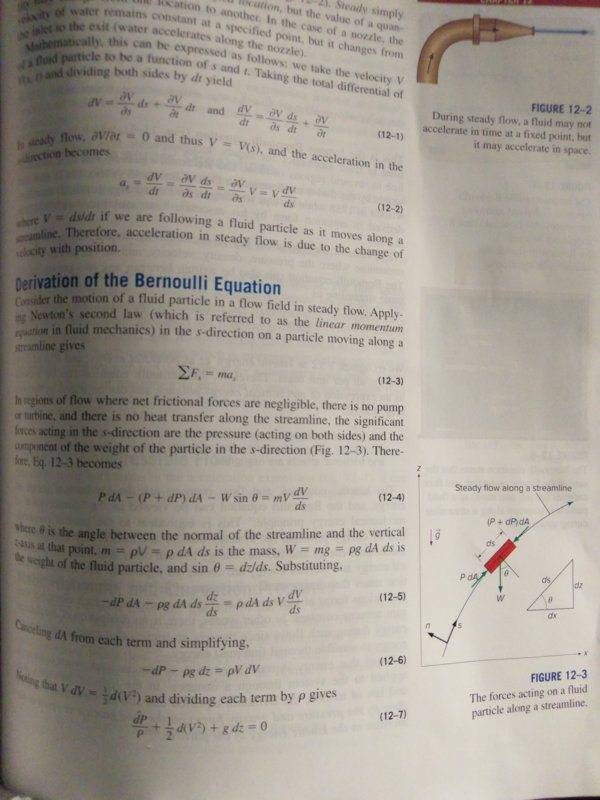
I have attached an image of a page out of the book I am using for context. The blue arrow in Figure 12-3 describes the motion of the particle. I figured the net force would need to be in the same direction, but apparently the net force opposes the motion. So, in Figure 12-3 the pressure at the top of the particle is higher than the pressure at the bottom (P + dP versus P). I am wondering why this is the case.
Last edited:
 !
!