SUMMARY
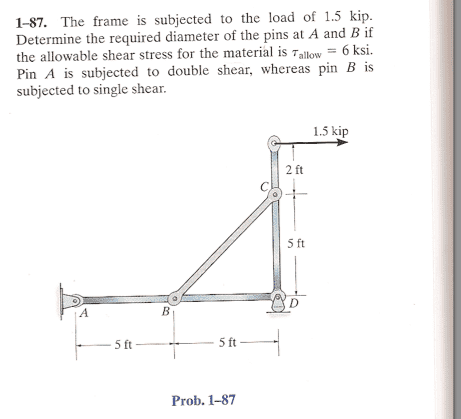
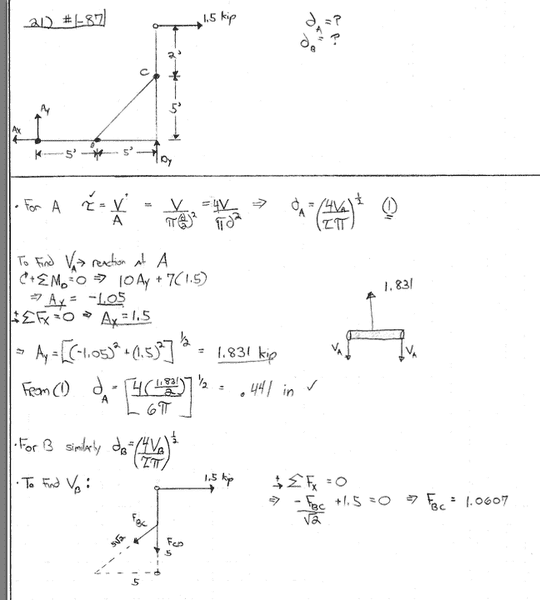
The discussion centers on the analysis of forces in a frame structure, specifically addressing the calculation of the force in member BC and the misunderstanding of zero-force members. Participants clarify that member BC cannot be a zero-force member due to the geometry of the frame, which requires a combination of force and moment summations for accurate analysis. The failure of the sum of forces approach is attributed to the non-concurrent nature of the forces involved, emphasizing the importance of using both methods for static equilibrium. The conversation concludes with recommendations for further study and understanding of structural analysis principles.
PREREQUISITES
- Understanding of static equilibrium principles in structural analysis
- Familiarity with force and moment summation methods
- Knowledge of frame structures versus truss structures
- Basic proficiency in using Free Body Diagrams (FBDs)
NEXT STEPS
- Study the method of sections for analyzing frame structures
- Learn about Free Body Diagrams (FBDs) in detail
- Explore the concept of zero-force members in structural analysis
- Review the book "Simplified Engineering for Architects and Builders" by Harry Parker and James Ambrose
USEFUL FOR
Engineering students, structural analysts, and professionals involved in the design and analysis of frame structures will benefit from this discussion, particularly those seeking to deepen their understanding of force analysis and equilibrium conditions.