babu9000 said:
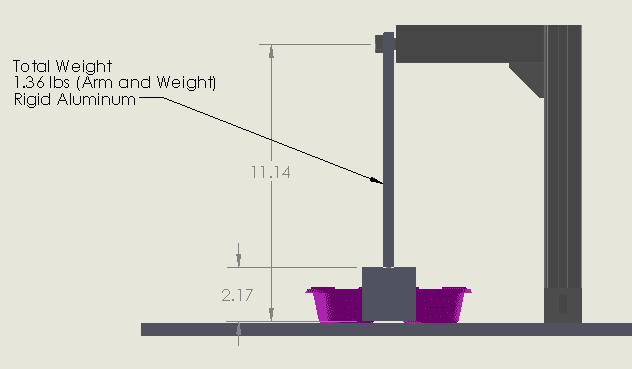
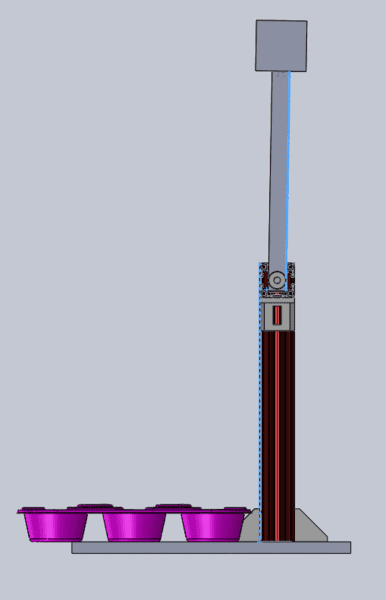
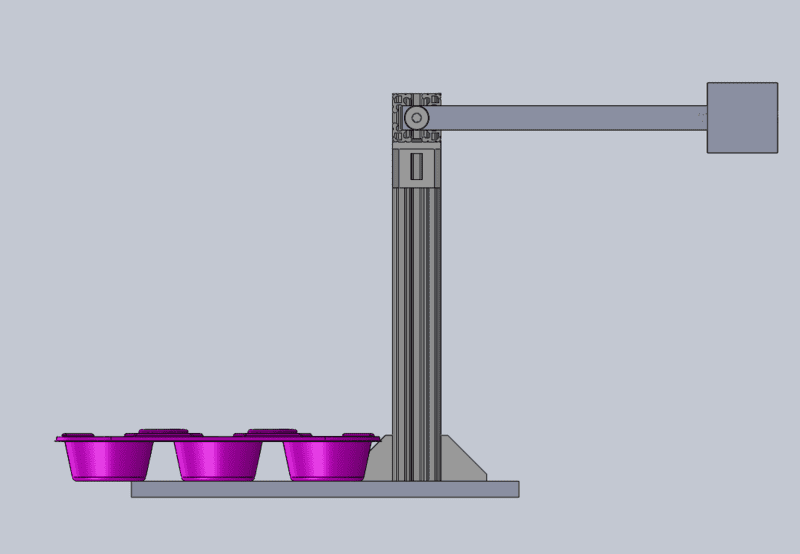
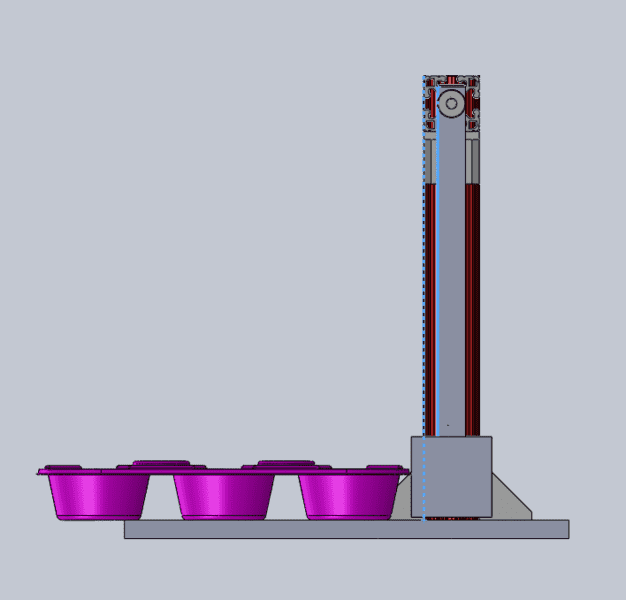
I am trying to figure out force or energy imparted on the stationary object. I don't have a good way to measure the height on recoil and the material is plastic and soft.
I was trying fine Velocity and Force and make an assumption of .1s for time.
Garbage in, garbage out. You cannot get accurate numbers out if you do not have accurate numbers to put in.
Since this is a pendulum on an axle, we are talking rotational kinetic energy given by ##KE = \frac{1}{2}I \omega^2## where I is the moment of inertia of the pendulum and ##\omega## is its rotation rate (e.g. in radians/sec).
You can obtain the moment of inertia for a long thin uniform beam about an axis at one end from Google. Your pendulum may be neither a uniform beam nor a mass on the end of a beam of negligible mass -- that complicates things. You may have to work to get a good number for its moment of inertia. [Treat it as a beam plus a mass and add the two moments of inertia -- that would work]
The relevant angular momentum L will be ##L = I \omega##.
The angular impulse (change in angular momentum) is given by the difference between angular momenta before and after the collision. It is also given by torque multiplied by time. And torque is given by force times length of the moment arm.
So you start with potential energy. You use that as rotational kinetic energy just prior to impact. You try to measure final potential energy. You use that as rotational kinetic energy just after impact. You use the two rotational energies to determine angular velocities just before and after impact. That gives you the change in angular momentum. That is the rotational impulse that is delivered by/to the target. You divide by the length of the moment arm to get the associated linear impulse.
If you are smart you stop there.
Otherwise, you divide by the estimated time of collision to get the estimated force of impact.