Discussion Overview
The discussion revolves around the formation of images in concave mirrors, specifically addressing the nature of real and virtual images, how they can be perceived without screens, and the characteristics of light reflection in mirrors. Participants explore both theoretical and practical aspects of image formation.
Discussion Character
- Exploratory
- Technical explanation
- Debate/contested
Main Points Raised
- Some participants assert that real images can be seen with the naked eye without a screen, while others question the conditions under which this occurs.
- There is a discussion about the nature of virtual images in concave mirrors, with some participants noting that virtual images are always erect, while others challenge this by providing examples.
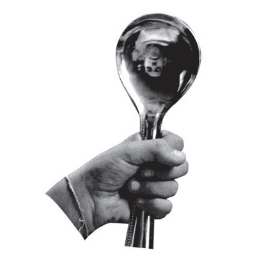
- Participants debate the visibility of images formed in a spoon, with some arguing that the image appears inside the spoon rather than behind it.
- Concerns are raised about how images can be seen without a screen, leading to questions about the role of light rays and the eye's perception of images.
- Some participants discuss the implications of placing the eye at different positions relative to the mirror and how this affects image clarity and orientation.
- There is contention regarding the classification of mirrors as opaque or transparent, with differing opinions on how light interacts with mirror surfaces.
Areas of Agreement / Disagreement
Participants express multiple competing views regarding the nature of real and virtual images, the conditions for their visibility, and the properties of mirrors. The discussion remains unresolved with no consensus reached on several key points.
Contextual Notes
Participants reference specific scenarios involving concave mirrors and the behavior of light, but there are unresolved assumptions about the definitions of real and virtual images, as well as the conditions under which they can be observed.