SUMMARY
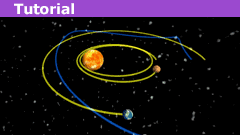
The discussion centers on implementing orbital mechanics within the Unity Game Engine for augmented reality applications. Key insights include the importance of scaling factors and their interdependence, which necessitates a sophisticated program design. The conversation highlights a successful simulation of Challenger Deep utilizing Unity, Oculus Rift, and Android tablets, showcasing the versatility of the engine. Additionally, it references a C++ implementation using OpenGL and the Velocity Verlet integration method.
PREREQUISITES
- Understanding of Unity Game Engine (version unspecified)
- Familiarity with augmented reality development
- Knowledge of orbital mechanics principles
- Experience with C++ and OpenGL programming
NEXT STEPS
- Explore Unity's physics engine for augmented reality applications
- Research the implementation of Velocity Verlet integration in game development
- Learn about scaling factors in simulation design
- Investigate C++ and OpenGL for advanced graphics programming
USEFUL FOR
Game developers, augmented reality engineers, and anyone interested in advanced simulation techniques within the Unity Game Engine.