jmlidea
- 1
- 0
Hi,
First off, let me say that I failed physics in high school and got myself a C- in basic calc. so I don't understand much of the math language (although I can understand its meaning). Further, I'm not an electrical engineer; however the practical applications of math, engineering, and physics is what makes me happy!
So, here's my idea:
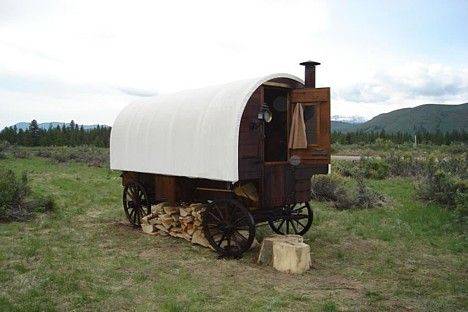
I want to build a solar powered sheepwagon/tiny house on wheels!
So here's the details:
The wagon will weigh about 6,000 lbs. (including batteries)
Operational speed should be about 3-5 mph.
I'd like it to run completely on solar. I'm thinking to use amorphous silicon solar cells, as they are flexible and seem to be more efficient than wafer silicon cells.
On board electrical consumption requirements (e.g. radio, water pumps, lights, laptop, cell phone) should operate on a 12 volt system through a different electrical system than the main propulsion. So don't figure these...
I would like to know only what power is required to get this sheepwagon moving, what energy is required to keep it moving, if I would be able to climb any hills, and how long a sustained trip could last given an 12 hour period of full sun.
I know it's a longshot, but I don't know the math or the physics. Any help would be appreciated!
Thanks!
First off, let me say that I failed physics in high school and got myself a C- in basic calc. so I don't understand much of the math language (although I can understand its meaning). Further, I'm not an electrical engineer; however the practical applications of math, engineering, and physics is what makes me happy!
So, here's my idea:
I want to build a solar powered sheepwagon/tiny house on wheels!
So here's the details:
The wagon will weigh about 6,000 lbs. (including batteries)
Operational speed should be about 3-5 mph.
I'd like it to run completely on solar. I'm thinking to use amorphous silicon solar cells, as they are flexible and seem to be more efficient than wafer silicon cells.
On board electrical consumption requirements (e.g. radio, water pumps, lights, laptop, cell phone) should operate on a 12 volt system through a different electrical system than the main propulsion. So don't figure these...
I would like to know only what power is required to get this sheepwagon moving, what energy is required to keep it moving, if I would be able to climb any hills, and how long a sustained trip could last given an 12 hour period of full sun.
I know it's a longshot, but I don't know the math or the physics. Any help would be appreciated!
Thanks!