Discussion Overview
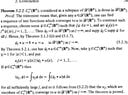
The discussion revolves around understanding a specific integral identity within a proof, particularly focusing on the role of the functions involved, such as the support function and the convolution. The scope includes mathematical reasoning and technical explanation related to integrals in the context of analysis.
Discussion Character
- Technical explanation
- Mathematical reasoning
Main Points Raised
- One participant questions why the integral identity $\int u_j \phi dx= \int (\psi_j \ast u) \phi dx$ holds.
- Another participant confirms that $\chi(x/j) = 1$ for $|x| < j$ and discusses the implications of choosing $j$ sufficiently large.
- A third participant elaborates on the conditions under which the integral holds, specifying that if $M > 0$ and $j > M$, then $\phi(x) = 0$ for $|x| \ge j$, leading to the equality of the integrals.
- The same participant reiterates the steps leading to the conclusion of the integral identity, emphasizing the conditions on $j$ and the support of $\phi$.
- A later reply indicates understanding of the explanation provided, suggesting clarity on the topic.
Areas of Agreement / Disagreement
Participants generally agree on the conditions under which the integral identity holds, but the initial question indicates some uncertainty regarding the reasoning behind it. No competing views are presented, and the discussion appears to be resolved in terms of understanding the integral identity.
Contextual Notes
The discussion relies on specific assumptions about the functions involved, such as the support of $\phi$ and the behavior of $\chi(x/j)$, which are not fully explored in terms of their broader implications or definitions.