What's the difference between series an parallel components in the pictures

Click For Summary
SUMMARY

The discussion focuses on the differences between connecting components in series and parallel configurations, specifically regarding resistors (R) and capacitors (C). In the first circuit, the total impedance is calculated using parallel connections, specifically R4 and (R1 + (R2 || R3)). In the second circuit, the impedance is calculated using a series connection of R1 and C. The key takeaway is that the impedance of inductors and capacitors varies with frequency, unlike resistors, which maintain a constant impedance.

PREREQUISITES
  • Understanding of electrical impedance
  • Familiarity with series and parallel circuit configurations
  • Knowledge of resistor-capacitor (RC) circuits
  • Basic principles of frequency dependence in inductors and capacitors
NEXT STEPS
  • Study the concept of impedance in AC circuits
  • Learn about the frequency response of RC circuits
  • Explore the use of Δ (Delta) transformations in circuit analysis
  • Investigate the differences in impedance calculations for inductors and capacitors
USEFUL FOR

Electrical engineering students, circuit designers, and anyone interested in understanding impedance in AC circuits and the differences between series and parallel configurations.

snir
Messages
11
Reaction score
0
hi;
When I study - if we want to connect impedance in the case of: - we connect the R4 and (R1+(R2||R3)) as parallels
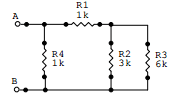
upload_2017-2-15_18-33-5.png


but when we want the get impedance of C and R of the right: - we connect that as series: Z(of C)+R .. why the different? please help!
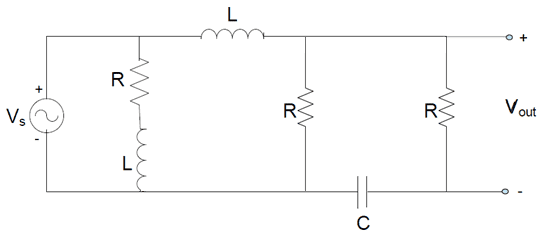
upload_2017-2-15_18-37-10.png
 
Engineering news on Phys.org
Because inductance and resistance are different things and you cannot combine them as exactly the same the way you can when everything is just resistances.
 
snir said:
hi;
When I study - if we want to connect impedance in the case of: - we connect the R4 and (R1+(R2||R3)) as parallels
View attachment 113258

but when we want the get impedance of C and R of the right: - we connect that as series: Z(of C)+R .. why the different? please help!
View attachment 113259
In the 2nd circuit, it's not clear what you are trying to solve for. In general, that circuit will not combine down to a simple component or two. Could you label the different components with different numbers (so each resistor has a different number, etc.), and ask what you would like to be able to solve for in the circuit?
 
berkeman said:
In the 2nd circuit, it's not clear what you are trying to solve for. In general, that circuit will not combine down to a simple component or two. Could you label the different components with different numbers (so each resistor has a different number, etc.), and ask what you would like to be able to solve for in the circuit?
upload_2017-2-15_18-57-18.png

I want to find a simple arranged of total impedance on the
different circuit 1 (all R) and 2 (with the C and L).

in case 1 told me that R4 and (R1+(R2||R3)) as parallels. and in case 2 impedance R1 and impedance C is series. but I think about it if I will connect something to the Terminals the connection of R1 and C is like a Δ transform with R2 no?

(may that matter what the purpose of tow cases - case 1 what the total R , and case 2 what the transfer function. If that matter i want to know why)
 
snir said:
View attachment 113261
I want to find a simple arranged of total impedance on the
different circuit 1 (all R) and 2 (with the C and L).

in case 1 told me that R4 and (R1+(R2||R3)) as parallels. and in case 2 impedance R1 and impedance C is series. but I think about it if I will connect something to the Terminals the connection of R1 and C is like a Δ transform with R2 no?

(may that matter what the purpose of tow cases - case 1 what the total R , and case 2 what the transfer function. If that matter i want to know why)
The impedance for circuit 2 looking into which 2 nodes? It makes a difference... :smile:
 
snir said:
the connection of R1 and C is like a Δ transform with R2 no?
No. Please reread post #2 and try to understand it.

Do you understand that the impedance of inductors and capacitors depends on the frequency, whereas the impedance of a resistor does not?
 

Similar threads

  • · Replies 6 ·
Replies
6
Views
2K
Replies
4
Views
1K
  • · Replies 6 ·
Replies
6
Views
4K
Replies
14
Views
3K
  • · Replies 20 ·
Replies
20
Views
3K
  • · Replies 8 ·
Replies
8
Views
2K
  • · Replies 31 ·
2
Replies
31
Views
5K
  • · Replies 6 ·
Replies
6
Views
2K
Replies
44
Views
6K
Replies
10
Views
1K