- 11,326
- 8,754
anorlunda submitted a new PF Insights post
Ohm's Law Mellow
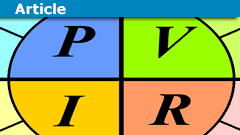
Continue reading the Original PF Insights Post.
Ohm's Law Mellow
Continue reading the Original PF Insights Post.
Ohm's Law is a definition applicable primarily to Ohmic materials, asserting that the relationship between voltage (V), current (I), and resistance (R) is expressed as V=I*R. This law is not universally applicable, as it breaks down under varying conditions such as temperature and material properties. The Drude model of conduction in metals provides a statistical basis for understanding Ohm's Law, highlighting its limitations and the conditions under which it holds true. Discussions emphasize the importance of recognizing the assumptions behind Ohm's Law and its derivation from fundamental principles of quantum electrodynamics.
PREREQUISITESElectrical engineers, physics students, and anyone interested in the foundational principles of electrical circuits and the limitations of classical laws in physics.
The ideal gas law doesn't apply for real gases. Is the ideal gas law then not a law?
We can determine the speed, distance, or rate (MPH/KPH) by knowing 2 of the 3. But, we certainly do not say that the length of the road causes motion of the vehicle. I see it is really no different with ohms law.LvW said:...and we can think about the meaning of the form: V=I*R.
We are using this form to find the "voltage drop" caused by a current I that goes through the resistor R.
However, is it - physically spoken - correct to say that the current I is producing a voltage V across the resistor R ?
(Because an electrical field within the resistive body is a precondition for a current I, is it not?)
LvW said:However, is it - physically spoken - correct to say that the current I is producing a voltage V across the resistor R ?
(Because an electrical field within the resistive body is a precondition for a current I, is it not?)
Yes. But Ohm's Law specifically refers to Metals at a constant temperature, doesn't it? Your point has been ignored by the contributions to this thread.vanhees71 said:The electric conductivity of course is a function of temperature and chemical potential (for an anisotropic material it's even a tensor).
sophiecentaur said:Yes. But Ohm's Law specifically refers to Metals at a constant temperature, doesn't it? Your point has been ignored by the contributions to this thread.
vanhees71 said:One should also mention that the Drude model is not the final answer but that the "electron theory of metals" is one of the first examples for a degenerate Fermi gas (Sommerfeld model). The model was extended by Sommerfeld, explaining the correct relation between electric and heat conductivity (Wiedemann-Franz law).
ZapperZ said:However, since the OP discussed the "non-derivable" issue, and did not even mention the Drude model, I consider that to be a significant omission.
anorlunda said:It sounds like you didn't read to the end. The article does mention the Dude model as one of five levels at which you can study electricity. It also says that the scope of the article was limited to circuit analysis.
LvW said:However, is it... correct to say that the current I is producing a voltage V across the resistor R ?
I disagree to the general Idea that Ohm's Law is not a law, yet I strongly support the importance of this issue which I think boils down to the very basics philosophy of what is a physical law, what are the therms under which it consider violated.anorlunda said:anorlunda submitted a new PF Insights post
Ohm's Law Mellow
Continue reading the Original PF Insights Post.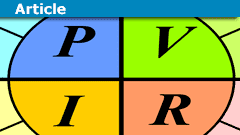
 )
)I wholeheartedly agree. It's a formula / definition and says nothing about whether or not Ohm's law happens to apply to what's connected to the terminals on the 'black box' we're examining. R could change, or not as V,I or T changes. If it doesn't happen to change then the component is not following Ohm's Law. But one calculation wouldn't tell you one way or the other.anorlunda said:I view the definition of R as the ratio of V and I. As a definition, it can't be violated by definition (pun intended
vanhees71 said:Ohm's Law is derived from many-body theory. It's defining a typical transport coefficient in the sense of linear-response theory. It's the "answer" of the medium to applying an electromagnetic field, and defines the electric conductivity in terms of the induced current, ##\vec{j}=\sigma \vec{E}##, where in general ##\sigma## is a tensor and depends on the frequency of the applied field. So Ohm's Law is a derived law and has its limit of validity (particularly the strength of the electromagnetic field must not be too large in order to stay in the regime of linear-response theory).