Why is the first law of thermodynamics useful in developing these equations?

Click For Summary

Discussion Overview

The discussion revolves around the utility of the first law of thermodynamics in developing the non-flow energy equation and the steady-flow energy equation. Participants explore the relationships between energy components, such as kinetic energy, potential energy, and specific enthalpy, within the context of closed and open systems.

Discussion Character

  • Technical explanation
  • Conceptual clarification
  • Homework-related
  • Debate/contested

Main Points Raised

  • One participant questions the usefulness of the first law of thermodynamics in developing the non-flow and steady-flow energy equations, expressing uncertainty about their understanding and ability to explain the concepts.
  • Another participant explains that in the steady-flow equation, the first law equation includes terms for kinetic and potential energy that flow into and out of the control volume, and emphasizes the separation of work done by the system into components related to fluid movement and shaft work.
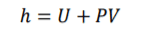
  • There is a reiteration of the importance of specific enthalpy in the steady-flow equation, linking it to the internal energy of the fluid streams and the work associated with fluid movement.
  • A participant seeks feedback on whether their mathematical approach to developing the equations makes sense in relation to the question posed.
  • One participant suggests resources for correctly understanding the development of the open system version of the first law, indicating that there may be established methods or explanations available in literature.

Areas of Agreement / Disagreement

Participants express varying levels of understanding and clarity regarding the application of the first law to the equations in question. There is no clear consensus on the explanations provided, and multiple viewpoints on the interpretation of the first law's application remain evident.

Contextual Notes

Some participants express uncertainty about specific terms and concepts, such as work (Wx), and there are indications of missing assumptions or definitions that could clarify the discussion further.

lee123456789
Messages
90
Reaction score
5
Homework Statement
dont know what this means
Relevant Equations
in the post
why it is first law of thermodynamics useful in developing the non-flow energy equation and steady-flow energy equation.

First Law Equation (FLE) =
1

Screenshot 2020-11-05 150918.png

1.1
Screenshot 2020-11-05 150600.png

Non-Flow Equation =
2
Screenshot 2020-11-05 150804.png

Steady-Flow Equation =
3
Screenshot 2020-11-05 150614.png

Specific Entrapy of Steady-Flow
Screenshot 2020-11-05 151631.png

4
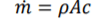
Mass Flow
5
Screenshot 2020-11-05 153158.png


I understand (i think) but can't explain.
Im understand it (i think) but finding hard to explain can somebody help. is what i put fitting the question?, how do i make it better? can somebody help it

FLE can be expressed as 1.1.
The first law of thermodynamics (1) contains (kinetic energy change) & PE (potential energy change). Theses contain contain two equation components that if u minus second half from first half will equal U,KE or PE. This allows (1) RHS to be broken down and reranged into two individual equation components forming (1.1).

Non-Flow
The system is closed so is not effected by external factors so addaction components need not be included into the eqaution. FLE (1) under non-flow conditions Δ𝐾 and Δ𝑃E are negligible, so equal ( 0). Under theses conditon Δ𝐾 and Δ𝑃E are omitted from the equation forming equation (2)

Steady-Flow
for steady flow systems, the system is open so if effected by air flow so the equation is required to change to accommodate this factor. Mass flow change of area, speed or density cause mass flow change change. There is 2 mass flows, mass flow in and out. FLE (1.1) m for both equation components will be label m1 or m2. m effect all conditions within both equation components so can be brought out sided the brackets.

(U) specific internal energy is effected by specific entraphy and pressure & specific pressure. rearrange the equation allows you to determine specific entraphy of the system in and out. Specific entraphy is important for steady-flow and allows you to devople a key component of the eqaution.

I don't know what Wx (work) is and how to explain it?
 

Attachments

  • Screenshot 2020-11-05 150614.png
    Screenshot 2020-11-05 150614.png
    3.8 KB · Views: 204
Physics news on Phys.org
In the development of the steady flow equation, the starting point is the first law equation. The terms involving KE and PE represent KE and PE flowing into and out of the control volume. The terms involving specific enthalpy are partly related to the internal energy of the streams flowing into and out of the control volume. But, in addition to this, the most important point about SFEE is that the work done by the system on the surroundings is subdivided into 2 parts: (1) work associated with pushing fluid into and out of the control volume and the remainder of the work called "shaft work" (since a rotating shaft of a turbine, compressor, or pump are typically involved) ##\dot{W_x}##. The part associated with pushing fluid into and out of the control volume is separated, and included with the specific internal energy flowing into and out of the control volume, to form the specific enthalpy of these streams. This is a very convenient way of work with an open system. In the steady flow equation, the internal energy, kinetic energy, and potential energy of the fluid contained within the control volume are not changing with time, so that part of the first law doesn't play a role in the SFEE.
 
  • Like
Likes   Reactions: etotheipi
Chestermiller said:
In the development of the steady flow equation, the starting point is the first law equation. The terms involving KE and PE represent KE and PE flowing into and out of the control volume. The terms involving specific enthalpy are partly related to the internal energy of the streams flowing into and out of the control volume. But, in addition to this, the most important point about SFEE is that the work done by the system on the surroundings is subdivided into 2 parts: (1) work associated with pushing fluid into and out of the control volume and the remainder of the work called "shaft work" (since a rotating shaft of a turbine, compressor, or pump are typically involved) ##\dot{W_x}##. The part associated with pushing fluid into and out of the control volume is separated, and included with the specific internal energy flowing into and out of the control volume, to form the specific enthalpy of these streams. This is a very convenient way of work with an open system. In the steady flow equation, the internal energy, kinetic energy, and potential energy of the fluid contained within the control volume are not changing with time, so that part of the first law doesn't play a role in the SFEE.

hi

thanks
can i ask
does what i put make any sense to the question they ask me. I was looking at as math way at how to devople the equation. its my HND question
 
To see the development of the open system version of the first law done correctly, see

Fundamentals of Engineering Thermodynamics by Moran et al (available as a PDF on line) and

Introduction to Chemical Engineering Thermodynamics by Smith and Van Ness.
 

Similar threads

  • · Replies 2 ·
Replies
2
Views
3K
  • · Replies 1 ·
Replies
1
Views
2K
  • · Replies 11 ·
Replies
11
Views
3K
  • · Replies 2 ·
Replies
2
Views
5K
Replies
12
Views
2K
  • · Replies 4 ·
Replies
4
Views
3K
  • · Replies 13 ·
Replies
13
Views
2K
  • · Replies 2 ·
Replies
2
Views
4K
  • · Replies 1 ·
Replies
1
Views
2K
  • · Replies 37 ·
2
Replies
37
Views
5K