Did Ohm, Ampere, and Volta Collaborate on Ohm's Law?

Click For Summary
SUMMARY

The discussion centers on the historical context of Ohm's Law and the naming of electrical units: volts, amperes, and ohms. Georg Ohm formulated Ohm's Law (V=IR) in 1827, but the units named after him and others were established later, in the 1870s and 1880s. The ampere was defined at the 1881 International Exposition of Electricity, originally as one-tenth of the unit in the centimetre–gram–second system. The conversation highlights the evolution of these units and their significance in electrical measurements.

PREREQUISITES
  • Understanding of Ohm's Law and its formula (V=IR)
  • Familiarity with the SI units of measurement: Volt, Ampere, Ohm
  • Knowledge of historical context regarding the development of electrical units
  • Basic principles of electrical circuits and resistance
NEXT STEPS
  • Research the historical development of the SI unit system and its impact on electrical engineering
  • Explore the significance of the 1881 International Exposition of Electricity in standardizing electrical units
  • Learn about the evolution of the ampere from the abampere and its implications in modern electrical systems
  • Investigate the relationship between resistance and conductance, including the concept of reciprocal units like mho
USEFUL FOR

Electrical engineers, physics educators, and students studying electromagnetism and electrical measurements will benefit from this discussion, particularly those interested in the historical evolution of electrical units and their practical applications.

akerkarprashant
Messages
74
Reaction score
9
TL;DR
History behind Ohm's law.
Voltage SI unit = Volts
Current SI unit = Ampere
Resistance SI unit = Ohm

Ohm's law : V=IR

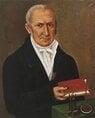
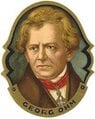
Did Georg Ohm (German), Ampere (French) & Volta (Italian) collaborated when Ohm came out with this electricity equation with units for voltage, current & resistance as per their surnames?

Credit goes to all. Volt & Ampere units were already in place?

Ohm came out this electricity equation.
 

Attachments

  • download - 2022-03-20T083811.888.jpeg
    download - 2022-03-20T083811.888.jpeg
    5.1 KB · Views: 149
  • download - 2022-03-20T084111.494.jpeg
    download - 2022-03-20T084111.494.jpeg
    9 KB · Views: 132
  • download - 2022-03-20T084218.150.jpeg
    download - 2022-03-20T084218.150.jpeg
    7.9 KB · Views: 155
Last edited:
Physics news on Phys.org
 
  • Like
  • Love
Likes   Reactions: DrClaude, Steve4Physics, vanhees71 and 4 others
akerkarprashant said:
Credit goes to all. Volt & Ampere units were already in place?
The units where Volt, Ampere and Ohm where defined in the 1870s/early 1880s long after the people they where named for had died.
 
  • Like
Likes   Reactions: vanhees71 and akerkarprashant
Ohm seems to have presented Ohm's law before units were introduced.
I believe the first units were the emu units defining the 'absolute ampere' (or abampere ) by
F/L=2II'/d. Does anyone know when, and for what reason, the SI ampere=abampere/10 was introduced.
That is related to when and why the SI ohm was introduced.
 
  • Like
Likes   Reactions: vanhees71, akerkarprashant and berkeman
Meir Achuz said:
Does anyone know when, and for what reason, the SI ampere=abampere/10 was introduced.
That is related to when and why the SI ohm was introduced.
There was a meeting in Britain over some days in 1861. A discussion over dinner one evening, sorted out which eponym would be associated with which physical parameter. The vote took place and the overnight discussion was reported in a note. I believe that is how the names were allocated to the SI units.
I followed it this far previously.
https://www.physicsforums.com/threa...conductivity-denoted-by-g.974343/post-6214413
 
  • Like
  • Informative
Likes   Reactions: Klystron, vanhees71, akerkarprashant and 1 other person
Siemens unit

Thanks.

The Conductance unit Siemens named after Ernst and Specific Resistance Mho were named after Ohm?
 
I'm not interested in the names.
When and why was the abampere changed to the ampere so that we have 30 amp fuses and not 3 abampere fuses (if anyone remembers what a fuse is)?
 
  • Like
Likes   Reactions: akerkarprashant
akerkarprashant said:
... Specific Resistance Mho were named after Ohm?
The "mho" is simply "ohm" spelled backwards to signify the reciprocal.
Mho was a widely used informal conductance unit equal to inverse resistance.

For a while in the 1930s there was a reciprocal to the farad of capacitance. Reciprocal capacitance was called "elastance", and the unit "daraf" was also derived from a backward spelling.

https://en.wikipedia.org/wiki/Elastance#Units
 
Last edited:
  • Like
  • Informative
Likes   Reactions: Klystron, vanhees71, akerkarprashant and 1 other person
  • #10
  • Like
Likes   Reactions: vanhees71 and akerkarprashant
  • #11
I'm afraid my question is still misunderstood. I know about the convention in 1960.
I am asking about the history from Wikipedia:
"an international convention, signed at the 1881 International Exposition of Electricity, established the ampere as a standard unit of electrical measurement for electric current.
The ampere was originally defined as one tenth of the unit of electric current in the centimetre–gram–second system of units." The Ampere must have been in some use before that, and why wasn't it made equal?
 
  • Like
Likes   Reactions: akerkarprashant and vanhees71
  • #12
Maybe this answers part of your question. I'm always glad when I get the confusing SI units right in my intro-E&M lecture ;-)).

https://www.iec.ch/history-si
 
  • Informative
Likes   Reactions: Klystron
  • #13
So you're saying Ohm met a lot of resistance when he proposed his law...
 
  • Haha
  • Like
Likes   Reactions: rude man, Klystron, vela and 3 others
  • #14
Meir Achuz said:
I believe the first units were the emu units defining the 'absolute ampere' (or abampere ) by
F/L=2II'/d. Does anyone know when, and for what reason, the SI ampere=abampere/10 was introduced.
That is related to when and why the SI ohm was introduced.

Meir Achuz said:
I'm afraid my question is still misunderstood. I know about the convention in 1960.
I am asking about the history from Wikipedia:
"an international convention, signed at the 1881 International Exposition of Electricity, established the ampere as a standard unit of electrical measurement for electric current.
The ampere was originally defined as one tenth of the unit of electric current in the centimetre–gram–second system of units." The Ampere must have been in some use before that, and why wasn't it made equal?

In 1862 the British Association chose, in a report, the practical units for voltage and resistance: 1 volt = 10^8 emu ('electromagnetic unit') of emf, and 1 ohm = 10^9 emu of resistance. The practical unit for current remained unnamed, but in 1875 it got the temporary name weber, and in 1881 it was renamed to ampere. The ampere was defined as 1 volt / 1 ohm.

The sizes of the emu of emf and the emu of resistance were inconveniently small for practical purposes. The size of the emu of current was not inconvenient, but the inconvenience was that is was not coherent with the practical units volt and ohm. (The name abampere did not yet exist, until 1904.)
 
  • Like
Likes   Reactions: vanhees71 and akerkarprashant
  • #15
The history in https://www.iec.ch/history-si explains a lot, but still leaves me with some questions.
Its seems that the ohm was chosen in 1881 so that "The ampere was originally defined as one tenth of the unit of electric current in the centimetre–gram–second system of units." (Wikipedia). The column of mercury was just the length for that. Would it have been that inconvenient to designate that measured resistance as 0.1 ohm? Were there already two Amperes before 1881? If they called the measurement 0.1 ohm, there would be only one ampere, and SI units would be the rationalized emu system. That would make it easier to "get the confusing SI units right."
 
  • Like
Likes   Reactions: akerkarprashant
  • #16
Meir Achuz said:
The column of mercury was just the length for that.
The length and diameter of the mercury column was chosen to give that resistance, so the standard could be regenerated elsewhere.

Meir Achuz said:
Were there already two Amperes before 1881?
You need to work in one system only at one time. CGS or MKS, don't try to mix the systems.
 
  • Like
Likes   Reactions: akerkarprashant
  • #17
Meir Achuz said:
The history in https://www.iec.ch/history-si explains a lot, but still leaves me with some questions.
Its seems that the ohm was chosen in 1881 so that "The ampere was originally defined as one tenth of the unit of electric current in the centimetre–gram–second system of units." (Wikipedia). The column of mercury was just the length for that. Would it have been that inconvenient to designate that measured resistance as 0.1 ohm? Were there already two Amperes before 1881? If they called the measurement 0.1 ohm, there would be only one ampere, and SI units would be the rationalized emu system. That would make it easier to "get the confusing SI units right."
I was more referring to the idiosyncratic definition of ##\mu_0## and ##\epsilon_0## and the fact that they choose the components of the electromagntic field ##(\vec{E},\vec{B})## to have different dimensions. From a physical point of view it's very confusing. Overall there were many systems of units in use like electrostatic, magnetostatic, Gaussian, rationalized Gaussian (aka Heaviside-Lorentz). The latter are the physically most adequate ones, but from a practical point of view unhandy.
 
  • Like
Likes   Reactions: akerkarprashant and Klystron
  • #18
I understand that muzero is now to be measured experimentally. I used to use that as a joke.
 
  • Like
Likes   Reactions: akerkarprashant
  • #19
Well, the "new SI" is indeed a big progress from a metrological point of view. Since now the elementary charge ##e## is fixed by definition, ##\mu_0## is now to be determined empirically. Together with the defined value of ##c## (speed of light in vacuo) then ##\epsilon_0## is also determined.
 
  • Like
Likes   Reactions: akerkarprashant
  • #20
Meir Achuz said:
I understand that muzero is now to be measured experimentally
Yes. 4π is now a measured number.?:)
 
  • Like
  • Haha
Likes   Reactions: Meir Achuz, akerkarprashant and vanhees71
  • #21
vanhees71 said:
Maybe this answers part of your question. I'm always glad when I get the confusing SI units right in my intro-E&M lecture ;-)).

https://www.iec.ch/history-si
I told my beginner EM classes that unit assignment was an 'evolving process'. Students appreciated ohm and mho as reciprocal units for resistance and conductance. A 'light would go on' and students would exclaim, "Now I get it!".

Perhaps the family name siemens was more well known in Europe. I invariably invert the 'i' and 'e'.

Weber also enjoyed lingering minor affection as the name appeared on useful tools. I cannot remember an American ever saying ampere outside a lecture hall, but monosyllabic amp became ubiquitous and very popular.

"I was so amped by your lecture!".
 
Last edited:
  • Like
Likes   Reactions: akerkarprashant and vanhees71

Similar threads

  • · Replies 57 ·
2
Replies
57
Views
13K
  • · Replies 6 ·
Replies
6
Views
5K
  • · Replies 16 ·
Replies
16
Views
2K
  • · Replies 3 ·
Replies
3
Views
5K
  • · Replies 28 ·
Replies
28
Views
4K
  • · Replies 38 ·
2
Replies
38
Views
5K
  • · Replies 22 ·
Replies
22
Views
3K
  • · Replies 7 ·
Replies
7
Views
7K
  • · Replies 18 ·
Replies
18
Views
5K
  • · Replies 1 ·
Replies
1
Views
2K