Help Determining the Minimum Thickness of a Vacuum Chamber Lid

Click For Summary

Discussion Overview

The discussion revolves around the feasibility and design considerations for constructing a vacuum chamber lid, specifically using a clear acrylic material for a cast iron bathtub intended for woodworking applications. Participants explore the necessary thickness of the lid and alternative designs for effective vacuum treatment.

Discussion Character

  • Exploratory
  • Technical explanation
  • Debate/contested

Main Points Raised

  • One participant inquires about the possibility and required thickness of a clear acrylic lid for a vacuum chamber, suggesting 1"-2" might be sufficient.
  • Another participant warns that flat surfaces may collapse under vacuum and recommends using a circular steel tube instead of a bathtub for better structural integrity.
  • A third participant calculates the atmospheric pressure force on the bathtub dimensions, equating it to a significant weight, and supports the idea of using a tube design.
  • A fourth participant references a resource for calculating stress and deflection in rectangular plates under uniform pressure, suggesting it could be useful for the design considerations.
  • Another participant proposes exploring vacuum bagging techniques as an alternative, indicating that a thin membrane might be more practical than a thick acrylic lid.

Areas of Agreement / Disagreement

Participants generally agree that using a tube design is preferable for vacuum treatment, but there is no consensus on the specific thickness required for the acrylic lid or the feasibility of using the bathtub as a vacuum chamber.

Contextual Notes

Participants express uncertainty regarding the appropriate thickness of materials and the structural integrity of different designs under vacuum conditions. The discussion includes various assumptions about material properties and design effectiveness.

Who May Find This Useful

Individuals interested in woodworking, vacuum technology, or those looking to build custom vacuum chambers may find this discussion relevant.

chrisritson
Messages
1
Reaction score
0
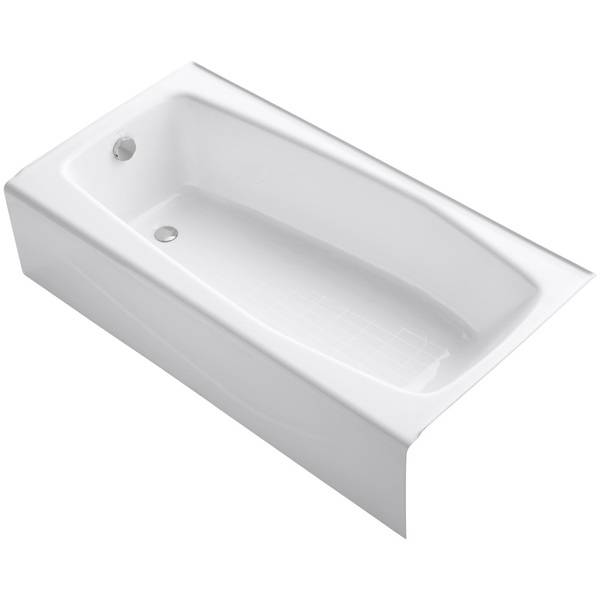
Hello. I am attempting to build a large vacuum chamber for woodworking (used to infuse wood with resin/stabilizer). I would like to use a cast iron bathtub, similar to the one pictured as the vessel. I would ideally like to use a clear acrylic lid (with a rubber gasket) like the one on my little vacuum chamber I've been using. Can someone tell me if this is possible and if so how thick would I need it to be? would 1"-2" work? bathtub dimensions are 60"x30" THANKS!
040688102733.jpg
 

Attachments

  • 040688102733.jpg
    040688102733.jpg
    10.2 KB · Views: 1,336
Engineering news on Phys.org
Welcome to PF.

Resin will condense on the clear lid. Flat surfaces will collapse under a vacuum. For vacuum treatment it is better to use a circular steel tube that you can slide your timber into on a small trolley. The tube would be open at one end where the door can be curved and will be much smaller than the length of the bath. If you must use a bath you should use a second bath, inverted as the cover.

By allowing the tube to tilt slightly, and by providing a top outlet for the vacuum pump, with a low drain at the bottom rear, you can allow the treatment fluid to flow into the vacuum as required, and the excess to be removed later when the vacuum is removed.

Building two identical systems next to each other makes it possible to cycle the loading, treatment and unloading cycles with the same fluid being transferred from one side to the other.
 
  • Like
Likes   Reactions: berkeman, Rive and anorlunda
The force from atmospheric pressure is roughly 65N for square inch (10N for square cm). 60*30*65N=117000N. That'll be equivalent with the weight of 12000kg, more or less, if I did the math correctly.

I too think you should go with a tube instead.
 
I agree the absolutely best approach is to use a tube/pipe; fyi, by going to pg 505 of the below online copy of "Roark's Formulas for Stress and Strain you will find the method of calculating the max stress and center deflection for a rectangular plate, simply supported, under a uniform (pressure) load, where q = load per unit area ie psi.

http://homepages.uc.edu/~caldwelm/Courses/Roark.pdf
 
I suggest doing a search on vacuum bagging. You might just accomplish this with a thin membrane over the surface of your wood. Over a bathtub like this, I doubt that you will find a piece of plastic thick enough at a reasonable price. You might also investigate using this - https://www.smooth-on.com/product-line/ez-brush/ I don't know whether this technique will work for you, but it might be worth investigating.
 
  • Like
Likes   Reactions: berkeman

Similar threads

Replies
14
Views
7K
  • · Replies 4 ·
Replies
4
Views
3K
  • · Replies 8 ·
Replies
8
Views
2K
  • · Replies 28 ·
Replies
28
Views
9K
  • · Replies 5 ·
Replies
5
Views
13K
  • · Replies 4 ·
Replies
4
Views
10K
  • · Replies 3 ·
Replies
3
Views
4K
  • · Replies 2 ·
Replies
2
Views
1K
Replies
3
Views
5K
  • · Replies 12 ·
Replies
12
Views
10K