Discussion Overview
The discussion revolves around the suitability of the IXTP86N20X4 MOSFET for driving applications at 5V, particularly in the context of a boost converter circuit. Participants explore various methods for driving the MOSFET, including the use of 555 timers and operational amplifiers, while addressing challenges faced in both physical prototypes and simulations.
Discussion Character
- Exploratory
- Technical explanation
- Debate/contested
- Mathematical reasoning
Main Points Raised
- Some participants suggest that the effectiveness of driving the IXTP86N20X4 MOSFET depends on the load it is driving and the switching speed required.
- There is mention of dedicated MOSFET drivers as a potential solution for driving the MOSFET effectively.
- Participants request more information about the circuit configuration, including the voltage of the MOSFET source and how it is connected to the load.
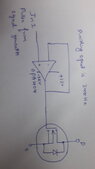
- Concerns are raised about the limitations of using a linear op-amp to drive the MOSFET, suggesting that a digital circuit or dedicated gate driver ICs may be necessary.
- Some participants express skepticism about the suitability of the IXTP86N20X4 MOSFET for low-voltage applications, indicating it may not be beginner-friendly.
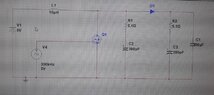
- There are discussions about the importance of the surrounding circuit in determining how the MOSFET is driven, emphasizing the need for a complete schematic for effective troubleshooting.
- One participant highlights that the schematic lacks a load, questioning the design's viability and suggesting that input current limits and output voltage regulation are necessary.
Areas of Agreement / Disagreement
Participants express differing views on the suitability of the IXTP86N20X4 MOSFET for 5V applications, with some arguing it is not appropriate while others suggest modifications or alternatives. The discussion remains unresolved regarding the best approach to drive the MOSFET effectively.
Contextual Notes
Limitations include the absence of a complete schematic, which hinders troubleshooting efforts. There are also unresolved questions about the maximum output current and ripple voltage requirements for the application.
 But the question fit so well into the level of the thread! That's what I get for reading the post and not noticing the author.