Discussion Overview
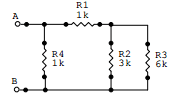
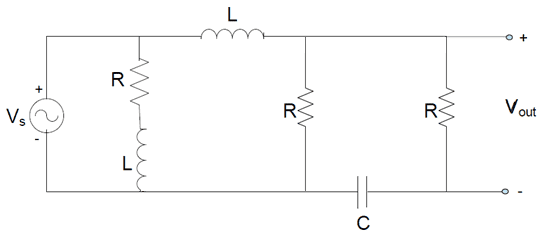
The discussion revolves around the differences in connecting components in electrical circuits, specifically focusing on the impedance of resistors, capacitors, and inductors in series and parallel configurations. Participants explore the implications of these configurations in two different circuits, one consisting solely of resistors and the other including capacitors and inductors.
Discussion Character
- Technical explanation
- Debate/contested
- Conceptual clarification
Main Points Raised
- One participant describes a scenario where resistors are connected in parallel and questions why capacitors and resistors are treated differently in terms of series connections.
- Another participant suggests that inductance and resistance cannot be combined in the same way as resistances alone.
- There is a request for clarification on what specific problem is being solved in the second circuit, indicating that it may not simplify to a basic component.
- A participant expresses confusion about the relationship between the impedance of R1 and C, proposing a comparison to a Δ transform with R2.
- Another participant emphasizes that the impedance of inductors and capacitors varies with frequency, unlike resistors, which do not depend on frequency.
Areas of Agreement / Disagreement
Participants exhibit differing views on the treatment of impedance in series and parallel configurations, with some asserting that inductors and capacitors have different behaviors compared to resistors. The discussion remains unresolved, with multiple competing perspectives on the implications of these configurations.
Contextual Notes
There are limitations in the clarity of the circuit diagrams and the specific components involved, which may affect the understanding of the impedance calculations. The discussion also touches on the purpose of the circuits, such as total resistance and transfer functions, but these aspects are not fully resolved.