123ryoma12
- 8
- 1
I already posted this, but it was on the wrong section.
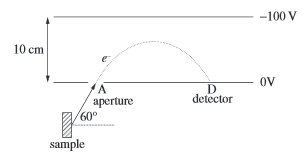
This is from the 2009 HSC exam. (I'm in Australia)
I checked the answers and found that electric field strength was
E = 100/0.10 = 1000V/m
My question is, what would the electric field strength be if the positively charged plate was +100V instead of 0V
Would it be 200/0.1 = 2000V/m?
Is the formula E = The difference in volts between the two plates / distance.
A person replied and said the two answer are correct
But another question came up to my mind
http://www.regentsprep.org/Regents/physics/phys03/aparplate/plate3.gif
In this gif where
E = V/d
Shouldn't it be E = 2V/d
as there is voltage going to the positive and negatively charged plate for example
if the battery has 10V
The negatively charged would be -10V and the positively charge would be 10V
Then E = 20/d
This is from the 2009 HSC exam. (I'm in Australia)
I checked the answers and found that electric field strength was
E = 100/0.10 = 1000V/m
My question is, what would the electric field strength be if the positively charged plate was +100V instead of 0V
Would it be 200/0.1 = 2000V/m?
Is the formula E = The difference in volts between the two plates / distance.
A person replied and said the two answer are correct
But another question came up to my mind
http://www.regentsprep.org/Regents/physics/phys03/aparplate/plate3.gif
In this gif where
E = V/d
Shouldn't it be E = 2V/d
as there is voltage going to the positive and negatively charged plate for example
if the battery has 10V
The negatively charged would be -10V and the positively charge would be 10V
Then E = 20/d