Interpreting 2-D FFTs of images

  • Context: Graduate 
  • Thread starter Thread starter Hyo X
  • Start date Start date
  • Tags Tags
    Images
Click For Summary
SUMMARY

This discussion focuses on extracting quantitative values from 2-D Fast Fourier Transforms (FFTs) of electron microscope images to characterize crystallinity. It highlights that well-defined Fourier peaks indicate higher crystallinity, while amorphous structures show less distinct peaks. The discussion emphasizes the importance of normalizing integrated power when comparing FFTs between different images. Additionally, it notes that symmetry analysis, such as identifying sixfold symmetry, can provide insights into the structural arrangement of materials.

PREREQUISITES
  • Understanding of 2-D Fast Fourier Transforms (FFTs)
  • Familiarity with electron microscopy techniques
  • Knowledge of crystallinity characterization methods
  • Experience with image processing software for FFT analysis
NEXT STEPS
  • Research methods for normalizing integrated power in FFTs
  • Explore techniques for quantifying crystallinity from FFT data
  • Learn about symmetry analysis in Fourier space
  • Investigate software tools for visualizing and comparing FFTs
USEFUL FOR

This discussion is beneficial for materials scientists, electron microscopy researchers, and anyone involved in analyzing crystallinity through Fourier Transform techniques.

Hyo X
Messages
101
Reaction score
11
I have electron microscope images of structures of varying periodicity, ranging from highly crystalline to highly amorphous. It is relatively straightforward to take FFTs of these images, but what i want to do is extract a quantitative value to characterize crystallinity and compare it between samples.

The easier question is, what kind of information can I extract from 2D FFTs about the structures?

The more difficult question is: how can I quantitatively compare FFTs between different images?

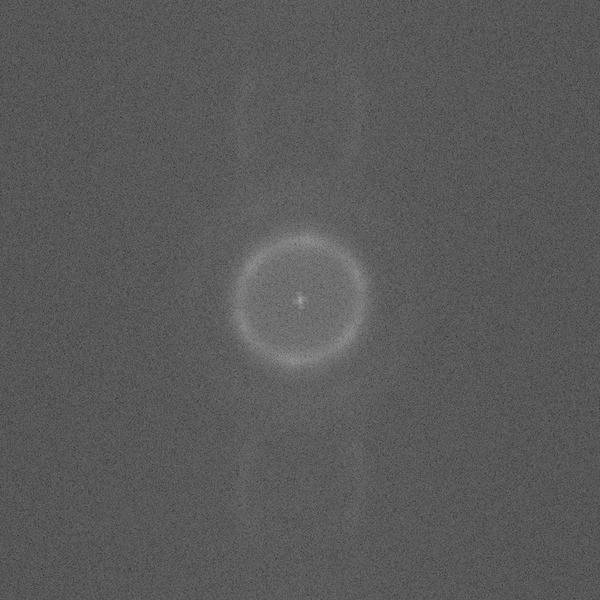
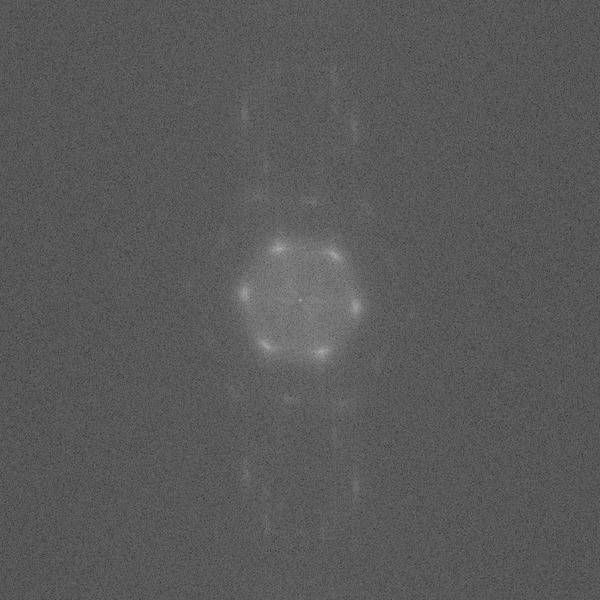
I have some ideas, but would appreciate suggestions. These are two example FFTs.

Image1
116A_33Hex_01_FFT.jpg

---
Image 2
116C_33IPA_30_FFT.jpg
 
Physics news on Phys.org
The more highly ordered the structure, the better defined the Fourier peaks, so you can conclude for example that the lower image is from a more amorphous structure (though there is a slight amount of order due to the "ghost" rings on the y-axis).

The FT will also tell you what sort of symmetry is present - e.g. sixfold symmetry typically indicates a hexagonal-packed structure. The number of visible harmonics indicates the "fidelity" of the symmetry.

When comparing FFTs, be sure to normalise the integrated power.

What are your ideas? Presumably you have access to the actual (non Fourier-Transformed) images.

Claude.
 

Similar threads

  • · Replies 43 ·
2
Replies
43
Views
12K
  • · Replies 7 ·
Replies
7
Views
3K
Replies
8
Views
6K
Replies
7
Views
4K
  • · Replies 1 ·
Replies
1
Views
2K
Replies
7
Views
1K
  • · Replies 9 ·
Replies
9
Views
2K
  • · Replies 10 ·
Replies
10
Views
3K
  • · Replies 1 ·
Replies
1
Views
2K
  • · Replies 39 ·
2
Replies
39
Views
8K