On the magnetic dipole radiation in Griffith's book

Join the discussion
Ask a follow-up here, or get your own question answered by working scientists, mathematicians and engineers — people, not an autocomplete.
Real named experts · corrections over time · the nuance an AI answer skips
1 replies · 2K views
a1titude
Messages
5
Reaction score
1
Homework Statement
It's not a homework. I just saw the resultant equation to find that it's strange.
Relevant Equations
$$\mathbf{B} = \mathbf{\nabla} \times \mathbf{A} = - \frac {\mu_0 m_0 \omega^2} {4 \pi c^2} \left( \frac {\sin \theta} {r} \right) \cos [\omega (t - r/c)] \hat{\mathbf{\theta}}$$
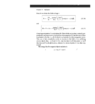
In 11.1.3 of Griffith's "Introduction to Electrodynamics 4Ed" appears magnetic dipole radiation, which results in the equation above. According to the resultant equation, there is no magnetic field in the axis of the wire loop because theta=0. However, I think the magnetic flux density is at maximum value there although its time-varying due to the alternating current. What am I missing now? Thanks for your concerns in advance.
 

Attachments
  • b.png
    b.png
    25.9 KB · Views: 199
  • a.png
    a.png
    15.7 KB · Views: 149
on Phys.org
a1titude said:
In 11.1.3 of Griffith's "Introduction to Electrodynamics 4Ed" appears magnetic dipole radiation, which results in the equation above. According to the resultant equation, there is no magnetic field in the axis of the wire loop because theta=0. However, I think the magnetic flux density is at maximum value there although its time-varying due to the alternating current. What am I missing now? Thanks for your concerns in advance.
For a time-independent current loop, the B-field is strongest for ##\theta = 0## (for a given ##r##), as you are thinking. But recall that the field falls off rapidly with distance as ##1/r^3##.

In Griffiths' calculation in section 11.1.3, he is considering a radiating, harmonically oscillating current loop. In this case, you get "radiation terms" in the results for B and E that decrease much more slowly with distance as ##1/r##. So for "large ##r##", only the radiation terms are significant. Note, in particular, Griffiths' "approximation 3" given as relation (11.34) on page 475; namely, assume ##r \gg c/\omega##.

It would probably be helpful for you to work problem 11.5 on page 477 (at least the first part where you are asked to find the fields without making approximation 3.)
 
Reply
  • Like
Likes   Reactions: hutchphd, vanhees71, PeroK and 1 other person