
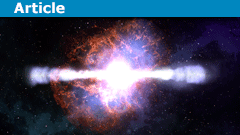
Star Death Explained: White Dwarfs to Black Holes
Stellar death outcomes depend on the star’s initial mass: stars below roughly 8 solar masses end as white dwarfs, while more massive stars undergo core collapse, exploding as supernovae and leaving behind neutron stars, pulsars, or black holes. Supernova 1987A, observed on 23 February 1987, confirmed that most explosion energy escapes as neutrinos rather than visible light.
Table of Contents
Key Takeaways
- Supernova 1987A occurred in the Large Magellanic Cloud, about 170,000 light-years from Earth, and was observed on 23 February 1987.
- Neutron stars measure roughly 10–20 km in diameter with average densities near 1017 kg/m³.
- The Chandrasekhar limit, approximately 1.4 solar masses, marks the point above which a collapsing core cannot stabilize as a white dwarf.
- Jocelyn Bell discovered the first pulsar in 1967 at Cambridge University’s Mullard Radio Astronomy Observatory, detecting pulses roughly every 1.34 seconds.
- Neutron stars have an upper mass limit often cited around 2–3 solar masses, though the exact figure depends on unknown nuclear physics at extreme densities.
- Neutrino detectors Kamiokande II in Japan and IMB in Cleveland, Ohio, registered a burst of neutrinos from Supernova 1987A before the shock became visible optically.
How Do Stars Form From Nebulae?
Stars form inside cold, dense molecular clouds called nebulae, found throughout galaxies and often concentrated along spiral arms. As gravity compresses a region of a nebula, temperature and pressure rise until conditions become extreme enough for thermonuclear fusion to ignite. At that point, hydrogen nuclei fuse into helium and a protostar becomes a true star.
What Happens to Lower-Mass Stars?
How long a star shines depends on its mass. Low-mass stars burn fuel slowly and can remain on the main sequence for billions of years. When a low- or intermediate-mass star exhausts its core fuel, it sheds its outer layers, and the remaining core settles into equilibrium supported by electron degeneracy pressure — the quantum mechanical resistance of tightly packed electrons to further compression.
The remnant is a white dwarf, a dense, Earth-sized stellar core that cools and fades over extremely long timescales. In theory, after many trillions of years such objects would become black dwarfs, though the universe is not old enough for any to exist yet.

What Happens Inside Massive Stars Before They Explode?
Massive stars follow a far more violent path than lower-mass stars. They burn hotter and faster, producing successively heavier elements in their cores until an iron-rich core forms. Because fusing iron does not release net energy under normal stellar conditions, an iron core cannot generate the outward pressure needed to support the star against gravity.
Fusion Stages in Massive Stars
| Stage | Fusion Products |
|---|---|
| 1 | Hydrogen → helium |
| 2 | Helium → carbon and oxygen |
| 3 | Later stages → neon, magnesium, silicon, sulfur |
| 4 | Final stage → iron-group elements accumulate in the core |
Core Collapse and Neutronization
If a collapsing stellar core exceeds the Chandrasekhar limit, approximately 1.4 solar masses, it cannot stabilize as a white dwarf. Gravity wins, and the core collapses toward nuclear densities comparable to an atomic nucleus. During this collapse, protons and electrons combine to form neutrons in a process called neutronization: p + e⁻ → n + νₑ.
This rapid conversion produces a huge burst of neutrinos — subatomic particles that interact only weakly with matter. The collapsing core becomes an ultra-dense, neutron-rich object, and the outer layers are set up for an enormous explosion.
How Do Core-Collapse Supernovae Release Energy?
A core-collapse supernova occurs when the collapsing stellar core rebounds and drives a shock wave outward, ejecting the star’s outer layers. A defining feature of these events is that the majority of the released energy is carried away by neutrinos, which interact only weakly with matter. A smaller fraction of the energy powers the expanding debris and the optical light astronomers observe.
Supernova 1987A: The First Confirmed Neutrino Detection
Supernova 1987A, observed on 23 February 1987 in the Large Magellanic Cloud roughly 170,000 light-years from Earth, remains a landmark case. Neutrino detectors including Kamiokande II in Japan and IMB in Cleveland, Ohio, registered a short burst of neutrinos before the shock breakout became visible to optical telescopes. The neutrino signal lasted on the order of a minute and marked the first detection of neutrinos from a supernova.
What Are Neutron Stars Made Of?
After a core-collapse supernova, the compact remnant left behind can be a neutron star. Typical neutron stars measure about 10–20 km in diameter with average densities around 1017 kg/m³. Their surface gravity is enormous, and escape velocities can reach a significant fraction of the speed of light.
The internal structure of neutron stars remains an active research area. Many models include a solid crust of neutron-rich nuclei arranged in a lattice above a region containing mostly free neutrons, and some predict neutron superfluidity in parts of the interior. Whether a solid core exists, and the detailed high-density equation of state, remain uncertain.
Neutron stars also have an upper mass limit, often cited around 2–3 solar masses, though the exact value depends on unknown nuclear physics at extreme densities. For more detail, see this discussion of why there are maximum mass limits for compact objects.
What Are Pulsars and How Were They Discovered?
Some neutron stars are observed as pulsars: rapidly spinning objects with intense magnetic fields that emit radiation in narrow beams. As the star rotates, those beams sweep past Earth like a lighthouse, producing highly regular pulses of radio, X-ray, or other emission.
In 1967, Jocelyn Bell, working at Cambridge University’s Mullard Radio Astronomy Observatory, discovered a source emitting regular pulses about every 1.34 seconds — one of the first pulsars ever identified. In supernova remnants such as the Crab Nebula, emission can include synchrotron radiation from charged particles spiraling through strong magnetic fields at relativistic speeds.
What Is a Black Hole?
If a compact stellar remnant exceeds the maximum mass that neutron degeneracy pressure and nuclear forces can support, it undergoes further collapse and forms a black hole: a region of spacetime bounded by an event horizon from which not even light can escape.
Simple descriptions sometimes invoke a “singularity” of infinite density, but what actually occurs at the deepest interior of a black hole is a question for quantum gravity. The observationally robust features are the event horizon itself and the strong-gravity effects black holes produce on surrounding matter and light.
Conclusion
The death of a star depends primarily on its mass. Lower-mass stars fade into white dwarfs, while massive stars end in spectacular core-collapse supernovae that leave behind neutron stars, pulsars, or black holes. These deaths seed space with heavy elements and shape the evolution of galaxies, showing that stellar death is also a driver of cosmic creation.
For related reading, see The Oppenheimer–Snyder model of gravitational collapse.
Frequently Asked Questions
What determines whether a star becomes a white dwarf, neutron star, or black hole?
A star’s initial mass determines its fate. Lower-mass stars shed their outer layers and leave behind white dwarfs supported by electron degeneracy pressure. More massive stars undergo core collapse, producing supernovae that leave neutron stars or, if the remnant is massive enough, black holes.
What is the Chandrasekhar limit?
The Chandrasekhar limit is approximately 1.4 solar masses, the maximum mass at which a stellar core can be supported by electron degeneracy pressure and stabilize as a white dwarf. Cores exceeding this limit collapse further under gravity.
Why do neutrinos carry away most of a supernova’s energy?
During core collapse, protons and electrons combine into neutrons through neutronization, releasing an enormous burst of neutrinos. Because neutrinos interact only weakly with matter, they escape almost unimpeded, carrying away the majority of the explosion’s total energy while only a smaller fraction powers the visible blast.
How big and dense are neutron stars?
Typical neutron stars measure about 10–20 km in diameter with average densities around 1017 kg/m³. Their upper mass limit is often cited around 2–3 solar masses, though the precise figure depends on nuclear physics that remains uncertain at these extreme densities.
What was significant about Supernova 1987A?
Supernova 1987A, observed on 23 February 1987 in the Large Magellanic Cloud about 170,000 light-years away, produced the first confirmed detection of neutrinos from a supernova. Detectors Kamiokande II in Japan and IMB in Cleveland, Ohio, recorded the neutrino burst before the explosion’s light became visible.
What is a pulsar?
A pulsar is a rapidly spinning neutron star with intense magnetic fields that emits radiation in narrow beams, producing regular pulses as it rotates, similar to a lighthouse. Jocelyn Bell discovered the first pulsar in 1967, detecting pulses roughly every 1.34 seconds.
Is there really a “singularity” inside a black hole?
Simple descriptions often invoke a singularity of infinite density, but what actually occurs at a black hole’s deepest interior is a question for quantum gravity that remains unresolved. The observationally confirmed features are the event horizon and the strong-gravity effects black holes exert on nearby matter and light.
Sources
- Begelman, Rees. Gravity’s Fatal Attraction: Black Holes in the Universe. New York: Scientific American Library, 1996.
- Chaisson, McMillan. Astronomy Today. 4th ed. New Jersey: Prentice Hall, 2002.

I have a BS in Information Sciences from UW-Milwaukee. I’ve helped manage Physics Forums for over 22 years. I enjoy learning and discussing new scientific developments. STEM communication and policy are big interests as well. Currently a Sr. SEO Specialist at Shopify and writer at importsem.com





Leave a Reply
Want to join the discussion?Feel free to contribute!