
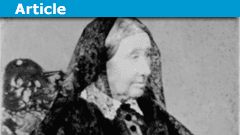
Mary Somerville & Caroline Herschel: The Google Doodle Story
Mary Somerville and Caroline Herschel were jointly honored by Google’s 2 February 2020 Doodle as the first two women elected honorary members of the Royal Astronomical Society (RAS). Somerville, a Scottish polymath born in 1780, became known for her 1831 work “The Mechanism of the Heavens,” and her scientific standing helped open the RAS to women, though full membership for women remained unavailable for another 80 years.
Table of Contents
Key Takeaways
- Mary Somerville was born in Jedburgh, Scotland, in 1780 and received far less formal education than her brothers.
- Somerville’s translation and expansion of Pierre Laplace’s work, published as “The Mechanism of the Heavens,” became a standard undergraduate textbook at Cambridge.
- Somerville presented a copy of her book to the Royal Astronomical Society in 1835, the same year she and Caroline Herschel were named honorary members.
- Neptune was discovered in 1846, after Somerville was among the scientists who predicted an eighth planet based on irregularities in Uranus’s orbit.
- Somerville signed John Stuart Mill’s 1868 petition for female suffrage.
- The Royal Bank of Scotland put Somerville’s image on a £10 note in 2017.
Who was Mary Somerville?
Mary Somerville was a Scottish polymath and science writer, born in Jedburgh in 1780. Unlike her brothers, she received little formal education and was largely self-taught from an early age. She went on to pursue academic study across multiple disciplines, becoming accomplished in astronomy, mathematics, geography and chemistry.
What is “The Mechanism of the Heavens”?
Somerville became widely known after publishing “The Mechanism of the Heavens,” a translation and expansion of Pierre Laplace’s original work. Her version became a standard textbook for undergraduates at Cambridge University. In 1835, Somerville presented a copy of the book to the Royal Astronomical Society.
What was Somerville’s role in the discovery of Neptune?
Somerville had a lifelong interest in astronomy. Working from observed irregularities in the orbit of Uranus, she was among a group of scientists who predicted the existence of an eighth planet. Neptune was discovered in 1846, confirming the prediction.
Somerville’s honorary membership of the Royal Astronomical Society in 1835 recognized these scientific contributions. For another 80 years after that, honorary membership remained the only route through which women could join the Society at all.
How did Somerville advocate for women’s rights?
Alongside her scientific work, Somerville campaigned against inequality for women. She signed John Stuart Mill’s petition for female suffrage in 1868. Decades later, the Royal Bank of Scotland recognized her contributions by featuring her portrait on a £10 note issued in 2017.
Mary Somerville died in Naples in 1872.
Who was Caroline Herschel?
Caroline Herschel was jointly honored alongside Mary Somerville as one of the first two women made honorary members of the Royal Astronomical Society in 1835. Details of Herschel’s own astronomical work are not covered in the source material used for this piece, though her joint recognition with Somerville marked a milestone for women’s participation in British scientific institutions.
Frequently Asked Questions
Why did Google create a Doodle for Mary Somerville and Caroline Herschel?
Google’s 2 February 2020 Doodle marked the anniversary of Somerville and Herschel becoming the first two women elected honorary members of the Royal Astronomical Society, an achievement in 1835 that recognized their scientific contributions at a time when women could not otherwise join the Society.
What is Mary Somerville best known for?
Mary Somerville is best known for “The Mechanism of the Heavens,” her translation and expansion of Pierre Laplace’s work, which became a standard undergraduate textbook at Cambridge University. She was also part of a group whose predictions, based on irregularities in Uranus’s orbit, contributed to the eventual discovery of Neptune in 1846.
When did women gain full membership in the Royal Astronomical Society?
Somerville and Herschel’s 1835 honorary membership was, for about 80 years afterward, the only way women could be part of the Royal Astronomical Society. The exact year full membership opened to women is not stated in the source material used for this piece.
What did Mary Somerville do for women’s rights?
Beyond her scientific career, Mary Somerville campaigned against inequality for women and signed John Stuart Mill’s petition for female suffrage in 1868.
Where and when did Mary Somerville die?
Mary Somerville died in Naples in 1872.
How has Mary Somerville been commemorated in Scotland?
The Royal Bank of Scotland featured Mary Somerville’s portrait on a £10 note issued in 2017, recognizing her contributions to science.

A Nuclear Fusion Physicist and Astrophysicist.
BSc Physics & Engineering, MSc Nuclear Physics & Engineering, MSc Astrophysics, PhD Plasma Physics







Leave a Reply
Want to join the discussion?Feel free to contribute!