
Sean Carroll Interview: Cosmology, Books & Insights
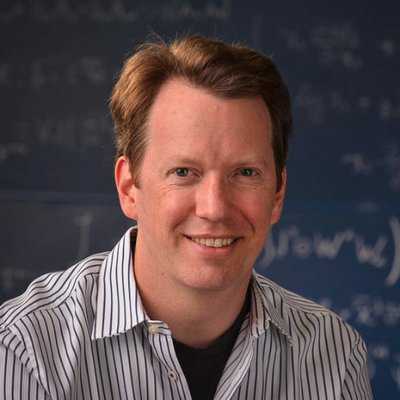 We are pleased to introduce Sean Carroll. Sean Carroll is a theoretical physicist at Caltech specializing in cosmology and quantum mechanics. He has a new book, The Big Picture, which addresses “On the Origins of Life, Meaning, and the Universe Itself.”
Table of Contents
Key Points
- Sean Carroll grew up near Philadelphia and studied at Villanova University.
- His interests shifted from astronomy to physics, focusing on black holes, particle physics, and cosmology.
- He completed graduate work in astronomy at Harvard and held postdocs at MIT and the ITP in Santa Barbara, exploring many topics in physics.
- Carroll collaborated on dark energy and modified gravity research and later obtained a faculty position at the University of Chicago.
- After being denied tenure at Chicago, he moved to Caltech, where he is a research professor.
- His book, The Big Picture, promotes naturalism and argues that science can address deep questions about origins and meaning.
- When writing for the public he balances technical detail with accessibility, focusing on core concepts relevant to his message.
- His Higgs book title, The Particle at the End of the Universe, signals the end of one era and the start of another in particle physics.
- Carroll values communicating scientific frontiers to the public and finds it rewarding.
- Blogging has shaped his communication style by forcing clarity and precision.
- He placed about a 30% chance on finding supersymmetry within five years (from when he commented), and remains open to various outcomes.
- He regards the discovery of gravitational waves as a major development with substantial potential for astronomy and tests of general relativity.
- He is watching for future discoveries in dark matter and primordial gravitational waves.
- Outside science, his hobbies include food, reading, and playing poker; favorite movies and books are listed below.
- He admired many scientists growing up but did not elevate individuals to “hero” status.
- His long-term goals focus on learning, contributing to science, and sharing its excitement.
About Sean Carroll
I grew up in the suburbs outside Philadelphia, went to public schools, then attended Villanova University. (They won the national basketball championship my first year there, and then again this year, so there’s been a lot of reminiscing.) I was an astronomy major at Villanova, but realized that the kinds of things I liked to think about — black holes, particle physics, cosmology — were more physics than astronomy, so I applied to graduate programs only in physics. I really wanted to go to Princeton or Harvard, but I wasn’t admitted; at the last minute I transferred my application to astronomy at Harvard. That’s how I ended up with no formal degrees in physics despite being a professional physicist.
Graduate work, early research, and postdocs
At Harvard I worked with George Field, Alan Guth, and others on a broad mix of topics. When I moved to MIT for a postdoc I continued exploring many areas: violations of Lorentz invariance, dynamical triangulations, supergravity, topological defects, closed timelike curves, and more. The field was changing in the early 1990s, and during a second postdoc at the ITP in Santa Barbara it became clear that aimless wandering wouldn’t sustain a career in physics.
I began searching for topics that both interested me and held broader scientific interest. In 1998 astronomers discovered the universe was accelerating, which turned out to be perfect timing for me: two of the discoverers, Brian Schmidt and Adam Riess, had been my classmates at Harvard. I had also collaborated with Bill Press and Ed Turner on a major review of the cosmological constant, so I was well-positioned to think about cosmic acceleration.
Faculty positions and current research
I wrote papers on quintessence, modified gravity, and interactions in the dark sector, while continuing to dabble in other topics. I obtained a faculty job at the University of Chicago, where in collaboration with Mark Trodden and others I published several highly cited papers on dark energy and modified gravity.
That work wasn’t enough to secure tenure at Chicago, for reasons that remain mysterious to me. I then moved to Caltech, where I am now a research professor. I’ve narrowed my focus to two main areas that I’m enjoying: (1) foundations of quantum mechanics, especially how space and time might emerge from the wave function of the universe; and (2) the evolution of entropy and complex structures over time. I’ve written several papers on these topics and have more in the pipeline.
About the book: The Big Picture
In The Big Picture I argue that there is one natural world accessible to science — and that this should not cause existential despair. The viewpoint I call “naturalism” suggests that many questions we currently find mysterious (the origin of the universe, the origin of life, the nature of consciousness) are, in principle, answerable by scientific investigation. The book tours several areas of science to show how they fit together and why none of these problems need be unsolvable.
Balancing technicality and accessibility
When writing for a general audience you must choose an audience: in this case, readers willing to think about tricky issues but without technical or mathematical background. You pick what is truly worth explaining and strive for honesty about those things. For example, with particle physics it’s tempting to list every particle and force, but if those details don’t support the book’s broader point, they should be removed to avoid distraction.
Why the Higgs book title?
The title of my Higgs book, The Particle at the End of the Universe, emphasizes that the Higgs was the final piece of the Standard Model puzzle. There isn’t a physical particle sitting at the literal end of the universe, but conceptually the Higgs represented the end of one era — the completion of the Standard Model — and the start of a new era of questions.
Science communication and media
Responsibility to the public
The scientific field as a whole has a responsibility to communicate with the public, though not every individual scientist needs to engage. Personally, I find it enjoyable and rewarding: explaining amazing scientific discoveries helps me understand topics better and also shares that excitement with a wide audience.
How blogging shaped my approach
Blogging is part of a diverse ecosystem of science communication — TV, magazines, websites, Twitter, podcasts, books, and so on. Blogging is personal, allows some depth, and gives immediate feedback. That feedback is crucial: if you make a claim without understanding it, readers will call you on it quickly, which forces clarity and accuracy.
Research outlook and predictions
Supersymmetry (SUSY)
Before the LHC turned on, I gave about 60% odds that it would find supersymmetry (preposterousuniverse.com/blog). The LHC has run at somewhat lower energies than expected and, so far, has shown no credible sign of SUSY. I now estimate roughly a 30% chance of discovering SUSY in the following five years. It’s possible SUSY exists but is broken at a very high energy scale and thus beyond LHC reach; I wouldn’t be surprised either way.
Gravitational waves
The direct detection of gravitational waves is fantastic. We already knew gravitational waves existed, but detectors now give us a new tool to investigate the universe in detail. This will be a tremendous boon for astronomy and could even let us test general relativity in the strong-field regime near black-hole horizons. If we’re lucky, we might see deviations from standard GR.
Next big discoveries
Having confirmed the Higgs and gravitational waves, two major goals remain: (1) directly detecting dark matter, and (2) detecting primordial gravitational waves in the cosmic microwave background. I might put a ~50% chance on direct dark matter detection within ten years and ~10% on primordial gravitational waves in the same timeframe, though many inflationary models predict amplitudes that are difficult to observe.
Personal life and favorites
- Hobbies: food, reading, playing poker.
- Movies: Casablanca, Brazil, Memento.
- Books: Pride and Prejudice; Gravity’s Rainbow; The Moon Is a Harsh Mistress.
- Places: Paris, Vietnam, Florence, Las Vegas.
On heroes and goals
I wasn’t a hero-worshipping kid. I admired many people for their accomplishments — especially in science, from Galileo to Stephen Hawking — but I always believed one could accomplish great things regardless of a person’s private character, so elevating individuals to hero status felt unwise.
My main “goal” is simple: keep having a good time, keep learning interesting things about the universe, and spread the excitement of science. It’s about the journey, not any particular destination. That said, I’d love to write a scientific paper that significantly improves our understanding of the universe — for example, reconciling quantum mechanics and gravity, or explaining the origin of life. Make no small plans!
— Thanks for participating, Sean Carroll! To learn more, visit his website Preposterous Universe and look for his books on Amazon: The Big Picture and Particle at the End of the Universe.
Read the next interview with physicist Clifford V. Johnson.
I have a BS in Information Sciences from UW-Milwaukee. I’ve helped manage Physics Forums for over 22 years. I enjoy learning and discussing new scientific developments. STEM communication and policy are big interests as well. Currently a Sr. SEO Specialist at Shopify and writer at importsem.com




The UNBELIEVABLE similarities between Sean Carroll’s idea (2016) (California Institute of Technology, USA) (within the wrong framework, the “universe”) and my ideas (2002-2010) (within the EDWs framework) on quantum mechanics, the relationship between Einstein relativity and quantum mechanics, life, the mind-brain problem, etc. athttps://plus.google.com/u/0/+GabrielVacariuhttp://philpapers.org/rec/VACTUS-5https://www.academia.edu/29578814/The_UNBELIEVABLE_similarities_between_Sean_Carrolls_idea_2016_California_Institute_of_Technology_USA_or_Frank_Wilczecks_ideas_2016_Nobel_Prize_on_Physics_and_my_ideas_2002-2010
Great interview!
Just started reading The Big Picture last night. As a naturalist, I’ve been looking forward to it for some time. Worth the wait!
THE Sean Carroll? Awesome!
This is a great interview! I’ve learned a lot by Sean Carroll’s books and papers and I’m keeping on doing so…
Thanks Sean!
I enjoyed this fairly recent lecture from Sean too
[MEDIA=youtube]1sA5esQmB04[/MEDIA]
Are you really able to make an argument that the laws of physics can explain consciousness?
I do believe it as a matter of faith, but would be hard pressed for a convincing argument.
Great interview!
I never knew he was a physicist without papers so he wrote his own. :-)
Great interview!Just started reading The Big Picture last night. As a naturalist, I've been looking forward to it for some time. Worth the wait!
THE Sean Carroll? Awesome!
Thanks Sean!I enjoyed this fairly recent lecture from Sean toohttps://www.youtube.com/watch?v=1sA5esQmB04