
MESSENGER Detects Sun’s Mass Loss and Solar Expansion
Table of Contents
Paper and context
Paper discussion: Solar system expansion and strong equivalence principle as seen by the NASA MESSENGER mission. Antonio Genova, Erwan Mazarico, Sander Goossens, Frank G. Lemoine, Gregory A. Neumann, David E. Smith & Maria T. Zuber. Nature Communications volume 9, Article number: 289.
Background: Sun and mass loss
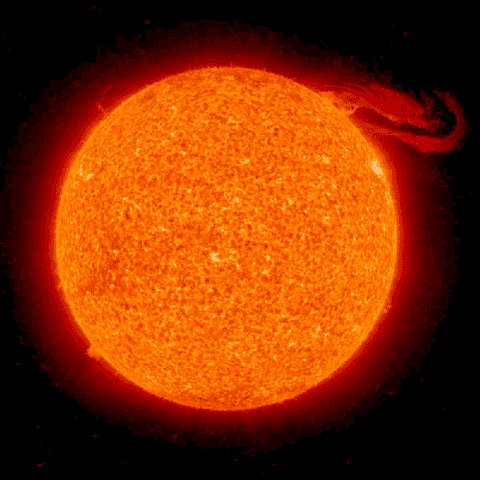
Students of physics learn many interesting facts about the Sun across different lessons and courses. When learning orbital mechanics, students are taught that the Sun’s gravitational field exerts a long-range force proportional to its mass and causes planets to orbit in elliptical paths.
In modern physics classes, students learn the Sun converts mass into energy by fusing hydrogen into helium; that energy is radiated from its surface and felt on Earth.
Why ask about changing gravity?
An astute student may ask: if the Sun is decreasing in mass to produce and radiate energy, is its gravitational influence on the planets getting weaker? For many years this was handwaved away as a negligibly small effect, but a probe orbiting Mercury has made the first direct measurements of the Sun’s loss of mass.
Estimating the effect
Order-of-magnitude estimate
The Sun’s luminosity is on the order of ##10^{26}## Watts. Applying Einstein’s relation and dividing this by ##c^2## gives a mass-loss rate on the order of a million tons per second — a rate that, through energy conservation, can be thought of as mass converted to energy by fusion. For context, this is roughly twice the mass of the largest ship ever built every second.
The fusion-radiation process is not the only way the Sun loses mass. There is also the proton outflow that forms the solar wind and more coherent losses such as coronal mass ejections. Compared to the Sun’s total mass, these losses amount to only a few parts per quadrillion per year. From Kepler’s laws, the orbital period scales with the inverse square root of the central mass, so even over billions of years we would not expect a noticeable orbital change. Measuring effects at the parts-per-trillion (or smaller) level is extremely difficult, so it would have been reasonable to assume the gravitational effect of the Sun’s shrinkage would remain unobserved — until now.
MESSENGER
Mission overview
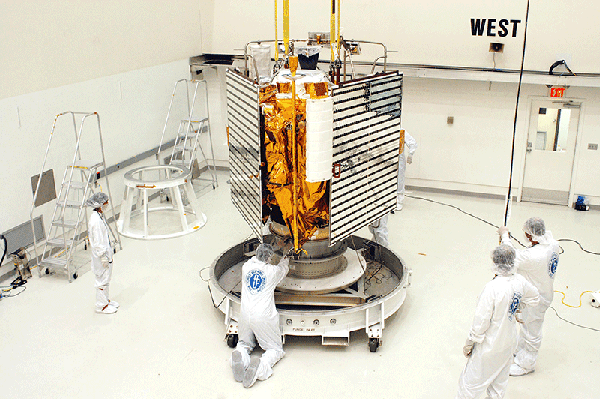
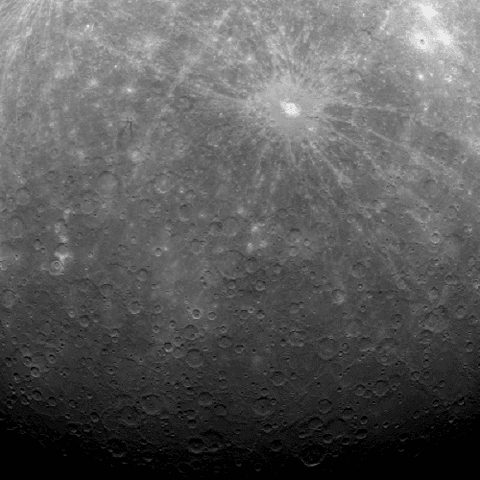
Mercury famously played a role in tests of gravity: its excess perihelion precession (about 43 arc-seconds per century) helped motivate Einstein’s general theory of relativity. From 2011 to 2015, Mercury hosted an Earth-built orbiter: Mercury Surface, Space Environment, Geochemistry, and Ranging — whose acronym spells MESSENGER. Its mission was to map Mercury’s surface and gravitational field to infer internal structure, and during its mission it returned striking imagery and precise tracking data.
The mission produced many papers on Mercury’s surface and interior (see, for example, this, this, and this). MESSENGER deliberately impacted Mercury on April 30, 2015, and since then the collaboration has continued analyzing the mission’s seven years of data. In its recent Nature Communications paper, the team used precise tracking of MESSENGER’s orbit to measure parameters tied to general relativity and potential violations.
Gravitational tests and results
One test is the Nordtvedt effect, which would appear if gravitational binding energy coupled differently to external gravity than rest mass does. That would violate the equivalence principle and cause objects of different composition to orbit differently. If a small Nordtvedt effect existed but had escaped earlier detection, it would shift the relative Earth–Mercury position by roughly three meters. MESSENGER’s data find this effect consistent with zero, constraining it to less than one part in ten thousand — about three times more precise than previous lunar laser-ranging limits.
Measured change in GM
The most striking result in the paper is the measured decrease in the Sun’s gravitational parameter, GM. Orbital equations depend on the product GM, so orbits alone cannot separate G and M without independent measurements. By precisely tracking the Earth–MESSENGER geometry, the collaboration measured a change in the Earth–Mercury distance of about two meters over the observation interval. This represents the first nonzero measurement of the changing gravitational parameter of the Sun. They report the Sun’s gravity weakening by ##6.13 pm 1.47 times 10^{-14}## per year (about 61 parts per quadrillion per year), implying a very slow expansion of the Solar System.
Causes for the decreasing gravity
Solar mass loss vs changing G
Two possibilities can explain a changing GM: the Sun’s mass M is decreasing, or Newton’s constant G is changing. Solar models provide an independent estimate of the expected mass loss. More precise solar-physics calculations (beyond the simple luminosity/c^2 estimate) give a fusion-related mass-loss rate of roughly 68 parts per quadrillion per year, and the solar-wind losses are estimated at about 10 parts per quadrillion per year (the wind estimate is less precise because the MESSENGER observation did not span a full sunspot cycle). Combined, these predicted losses are consistent with the measured decrease in GM within the reported uncertainty.
A skeptic might wonder whether the laws of physics themselves are changing. To test that, researchers look for a time-varying Newton’s constant. Using the combination of solar-model expectations and the MESSENGER orbit data, the team constrained a changing G to below about 40 parts per quadrillion per year — consistent with zero. Earlier constraints (for example, from long-term observations of binary neutron stars) were much looser; the prior best limit was ~600 parts per quadrillion per year. The MESSENGER-based result therefore tightens the limits and finds no evidence that gravity is changing over time.
Conclusion
In summary, MESSENGER’s precise orbital tracking provides the first direct nonzero measurement of the Sun’s decreasing gravitational parameter. The measured rate matches expectations from solar mass loss (radiation plus solar wind) and places tighter constraints on any time-variation of Newton’s constant. The observed effect corresponds to orbital changes on the scale of a few meters over several years — tiny, but now empirically detectable.
Ph.D. McGill University, 2015
My research is at the interface of biological physics and soft condensed matter. I am interested in using tools provided from biology to answer questions about the physics of soft materials. In the past I have investigated how DNA partitions itself into small spaces and how knots in DNA molecules move and untie. Moving forward, I will be investigating the physics of non-covalent chemical bonds using “DNA chainmail” and exploring non-equilibrium thermodynamics and fluid mechanics using protein gels.

Just as a sanity check, I took the figures given in your reference for the total energy dissipated by tidal forces:
"P = 110 ± 25 GW. For comparison this is 22 times smaller than the M% dissipation rate in the oceans (Cartwright & Ray 1991), but an order of magnitude greater than the rate in the atmosphere (Platzman 1991)."
https://ntrs.nasa.gov/archive/nasa/casi.ntrs.nasa.gov/20000072440.pdf
I multiplied 110 GW by 23, to combine losses from solid and liquid friction, which gives an estimate of the total amount of energy dissipated by all tidal forces on Earth:
http://www.wolframalpha.com/input/?i=110+*+10^9+*23+W
This gives 2.53 TW, about the same as total electrical power consumption on Earth.
I then used 1/2 * (G * Mass_earth * Mass_sun / Orbital radius of Earth):
http://www.wolframalpha.com/input/?…sun)*(mass+of+Earth))/(2*(astronomical+unit))
This gives 2.649 x 10^33 Joules for the orbital kinetic energy of Earth. Wolfram helpfully adds that this figure is 98% of their number for the "Earth's orbital kinetic energy around the Sun", so it looks right.
Divide the second number by the first number:
http://www.wolframalpha.com/input/?…/(2*(astronomical+unit))+/+(110+*+10^9+*23+W)
The result is that the Earth will stop orbiting the Sun due to its loss of orbital kinetic energy from tidal friction in a mere 33 trillion years.
If we rather cavalierly assume constant tidal friction over time, the age of the Earth is 4.5 billion years, so we have lost about
http://www.wolframalpha.com/input/?i=(age+of+the+earth)+/+33+trillion+years
or 1.38 * 10 ^ -4 = 0.000138 of the initial kinetic energy.
Call it about one percent of one percent.
That's also tossing all lunar tidal friction into the equation, which is not accurate for our solar distance calculation, as that mostly slows down the moon, rather than the Earth.
So, yeah … it's not a big factor.
The tidal effects are negligible.
The size of the tides is proportional to mass/distance[sup]3[/sup]. For tides on Earth the Sun has a weaker effect than the Moon already because the larger distance wins over the larger mass. For changes in Earth's orbit, you are now looking into feedback of these tides on the Earth/Sun gravitational interaction – so you get another factor 1/distance[sup]3[/sup], another factor of a few million relative to the Earth's influence on the Moon. In addition you want to change the orbit of Earth, not the orbit of the Moon. Another factor 80 from the larger mass. Completely negligible.
Mercury is closer to the Sun but it is still negligible for it.
This paper has a formula to estimate the effect: ##langle dot a rangle = -frac{4}{3} n a^{-4} hat s left( (1+23e^2) + 7 e^2 D)right)## where ##D=frac{hat p}{2 hat s}## and ##hat s = frac{9 k_0 m_1}{4 Q_0 m_0}R_0^5## and ##hat p = frac{9 k_1 m_0}{2 Q_1 m_1}R_1^5##. Here index 0 is the star, index 1 is the planet, m and R are mass and radius, k is the Love number and Q is the dissipation function. e is the orbital eccentricity. n is not described but as far as I understand it is the orbital frequency. It has to have units of 1/time, in the worst case I get it wrong by a factor 2 pi.
For Earth Wikipedia has a value of the Love number – about 0.3. Constraints on energy dissipation in the earth's body tide from satellite tracking and altimetry (PDF) tells us Q=280 for the Earth. I didn't find values for the Sun. Q in the Solar System (PDF) gives ##geq 10^4## for the gas giants, I'll use that value. Note that larger values lead to smaller tides. Let's use k=1, this is just an order of magnitude estimate anyway.
For Earth e=0.017 and n=1/year and a=1 AU.
Let's plug that in:
##hat p## = 1.7*10[sup]37[/sup] m[sup]5[/sup] for Earth
##hat s## = 1.1*10[sup]35[/sup] m[sup]5[/sup] for Sun
D = 77
Finally ##langle dot a rangle = -frac{4}{3 year} (1 AU)^{-4} cdot 1.1 cdot 10^{35} m^5 cdot left( (1+23cdot(0.017)^2) + 7 (0.017)^2 cdot 77)right)##
##langle dot a rangle = -3.4cdot 10^{-10} frac{m}{year}##
It is probably optimistic to assume that Mercury has the same k and Q as Earth. In that case ##hat p = 2.5cdot 10^{36} m^5## and ##hat s = 6cdot 10^{33} m^5## and ##langle dot a rangle = -0.18 frac{mu m}{year}##. Way too small to measure.
We've had probes in orbit for extended periods of time around Mercury, Venus, Mars, Jupiter, and Saturn.
Has anyone tried to use the data accumulated by these probes to measure the change in distance between Earth and each of these planets over long period of time?
I've only seen data for the change in the Earth-Mercury distance. Why can't we do the same for the other four planets?
After further thought, if the Earth is moving away from the Sun over over long periods of time, that might also help to solve the "faint young Sun" paradox, as it implies that Earth was closer to the Sun three or four billion years ago and thus received more sunshine. Same idea would apply to a wet early Mars.
https://en.wikipedia.org/wiki/Faint_young_Sun_paradox
The article states that the quantity that was measured was the distance from the Earth to Mercury:
"By very precisely tracking the distance to MESSENGER from Earth, the collaboration was able to measure the change in the Earth-Mercury distance over the several years of observation. This amounted to about two meters, and this was the first nonzero measurement of the changing gravitational parameter of the sun (keeping in mind the distance between them is at least 77,000,000,000 meters). They found that the sun’s gravity was getting proportionally weaker by 6.13±1.47×10−146.13±1.47×10⁻¹⁴ per year (61 parts per quadrillion), and thus the solar system is slowly expanding as well."
However, we know that tidal effects from friction will gradually slow down the orbit of a small body orbiting around a larger body, even if the small body is a solid mass such as the Earth's moon.
For example, quoting from https://phys.org/news/2015-09-moon.html :
"Gravitational coupling between the moon and the bulge nearest the moon acts as a torque on Earth's rotation, draining angular momentum and rotational kinetic energy from Earth's spin. In turn, angular momentum is added to the moon's orbit, accelerating it, which lifts the moon into a higher orbit with a longer period.
As a result of this, the distance between Earth and moon is increasing, and Earth's spin is slowing down. Measurements from lunar ranging experiments with laser reflectors (which were left behind during the Apollo missions) have found that the moon's distance to Earth increases by 38 mm (1.5 in) per year."
The equations for orbital mechanics always assume that there is conservation of energy in the system, but over long periods of time tiny effects such as heat dissipated by tidal friction make this assumption incorrect.
Has anyone estimated the effects of tidal friction on the Sun and the eight major planets?
Mercury would experience a greater effect because it's deeper in the gravitational field of the Sun, but the fact that Earth has oceans and an atmosphere and Mercury does not might well create much more friction. Liquids and gases dissipate tidal energy faster than solids. IOW, the Sun-Earth distance might increase faster than the Sun-Mercury distance, thus explaining the increasing gap between the two planets without requiring any changes to the way that gravity works.
The fact that Earth also has a large Moon would also affect the amount of dissipation of the total kinetic energy of the Earth, although that may not be affect the distance from Mercury to Earth directly.
Both Jupiter and Saturn contribute notably to the position of the Sun relative to the barycenter of the Solar System. Saturn has a smaller mass but the larger distance means it still plays a relevant role.
Wikipedia has an image – the 12 year period comes from Jupiter and the perturbation of that cycle comes from Saturn, with smaller contributions from other planets.Never heard about this before but its interesting
Very interesting. There's a minor LaTeX error after "77,000,000,000".
And last but not least a good reference to quote on the FAQ "Do constants change over time or space?"Yes it is interesting. Infact I thought to link between dark energy and this phenomenon by the information from the link about amazing facts about the universe and god- https://dailyjunkies.com/15-amazing-facts-about-the-universe-and-god/.If you could link the phenomenon it would be greatful
Certainly the sun is losing some of its heat, by time, so that it has become somewhat cooler than before .. and so it has become smaller by contraction, and because it gets cooler, its electromagnetic field will be less (and its gravity is less.)
http://www.quran-ayat.com/universe/new_page_2.htm#Cause_of_the_Gravity_
Both Jupiter and Saturn contribute notably to the position of the Sun relative to the barycenter of the Solar System. Saturn has a smaller mass but the larger distance means it still plays a relevant role.
Wikipedia has an image – the 12 year period comes from Jupiter and the perturbation of that cycle comes from Saturn, with smaller contributions from other planets.
that's not what I was asking or talking about.It appears that I did address what you were asking and talking about. So the rest of the argument about this subthread is pointless, and I am deleting it.
Oh nonsense. Peter was simply expanding on what you posted to make sure you and anyone else reading this thread understood that all the objects in the solar system pull on the Sun (and each other) and affect its position. I can almost guarantee you that someone reading this thread would see your post and then wonder if the same was true for objects other than Jupiter. Now they have their answer.You choose to start a comment that does not address my initial post with, "Oh nonsense."
If you don't understand what aspect of his comments I am addressing, then opening with, "Oh nonsense." isn't adding anything beneficial.
Ok, it's nonsense.
For your consideration:
Definition of pedantic
1: of, relating to, or being a pedant
2: narrowly, stodgily, and often ostentatiously learned
3: unimaginative, dull
Number 2 fits well to my point regarding his first comments.
And now this has gone way off topic.
Time to go.
Thanks.
His reply is directly on topic. So now that you know the ratio of the mass of the Sun and Jupiter, can you comment on where the Barycenter of our Solar System lies? :smile:I understand your position.
Taken as a whole, I disagree with your conclusion on "his reply".
The second part of his comments addressed my questions, and I thanked him for those.
No, I can't Mr. Berkeman.
I didn't know there was going to be a quiz.
The dog ate my paper. My car wouldn't start. I couldn't find my keys.
I have a doctors note that I can't take a quiz today, or any day. :)
I know, some people just have a need to add, counter, or otherwise add in things just because they feel the need to appear more knowledgeable.
"Pedantic" is the word that fits.Oh nonsense. Peter was simply expanding on what you posted to make sure you and anyone else reading this thread understood that all the objects in the solar system pull on the Sun (and each other) and affect its position. I can almost guarantee you that someone reading this thread would see your post and then wonder if the same was true for objects other than Jupiter. Now they have their answer.
Perhaps staying on topic to teach and learn is not as meaningful to some.His reply is directly on topic. So now that you know the ratio of the mass of the Sun and Jupiter, can you comment on where the Barycenter of our Solar System lies? :smile:
This is true of all the planets, not just Jupiter. Jupiter's effect is by far the largest, but I don't think it's the only detectable one. The strictly correct statement is that all of the objects in the Solar system orbit its barycenter, which can be thought of as the "center of mass" of the system as a whole, and this barycenter does not coincide with the center of any of the objects, including the Sun.Well now, of course Jupiter's gravity affects all the planets, as all the planets can affect each other. But now, that wasn't the point, and that's not what I was asking or talking about.
I know, some people just have a need to add, counter, or otherwise add in things just because they feel the need to appear more knowledgeable.
"Pedantic" is the word that fits.
Perhaps staying on topic to teach and learn is not as meaningful to some.
My time here will likely be very short.
Thanks for playing just the same. :)
This is true of all the planets, not just Jupiter. Jupiter's effect is by far the largest, but I don't think it's the only detectable one. The strictly correct statement is that all of the objects in the Solar system orbit its barycenter, which can be thought of as the "center of mass" of the system as a whole, and this barycenter does not coincide with the center of any of the objects, including the Sun.
Never. The rate of mass loss of the Sun is much, much too small. The sun is over 1100 times as massive as Jupiter, and the mass loss rate is roughly 6 parts in ##10^{14}## per year, so even after 5 billion years more, when the Sun is expected to become a red giant, the Sun will have lost only about 1 part in 100,000 of its current mass, so it will still be over 1100 times as massive as Jupiter.Soooo, you're sayin there's a chance!? LOL.
Thanks for the answer.
Due to the gravitational force of Jupiter it actually affects the Sun's position in our solar system, such that the Sun is not in a constant epicenter where all the planets form their orbits around that constantThis is true of all the planets, not just Jupiter. Jupiter's effect is by far the largest, but I don't think it's the only detectable one. The strictly correct statement is that all of the objects in the Solar system orbit its barycenter, which can be thought of as the "center of mass" of the system as a whole, and this barycenter does not coincide with the center of any of the objects, including the Sun.
As the Sun's mass lessens, and with that it's gravitation force lessens, then at what point in the future will Jupiter's gravity have a greater effect on the planets between it and the Sun?Never. The rate of mass loss of the Sun is much, much too small. The sun is over 1100 times as massive as Jupiter, and the mass loss rate is roughly 6 parts in ##10^{14}## per year, so even after 5 billion years more, when the Sun is expected to become a red giant, the Sun will have lost only about 1 part in 100,000 of its current mass, so it will still be over 1100 times as massive as Jupiter.
Some of you likely already know some of the following, but it was a very interesting point, about the Sun, when I heard it.
Jupiter is massive, and so is the Sun. Given the mass of Jupiter it has great total gravitational force. That force also is exerted noticeably on the Sun itself.
Due to the gravitational force of Jupiter it actually affects the Sun's position in our solar system, such that the Sun is not in a constant epicenter where all the planets form their orbits around that constant point. Rather, Jupiter's gravity pulls on the Sun such that the Sun also has an "orbit", and it's orbit is around an imaginary point that the sun orbits around. So, the Sun itself is also pulled towards Jupiter as Jupiter is pulled towards the sun, and their respective gravity creates both Jupiters's orbit as well as giving the Sun an "orbit" that is around the "center" of the solar system.
Very cool. And it demonstrates the massive gravitational power of Jupiter.
Question:
As the Sun's mass lessens, and with that it's gravitation force lessens, then at what point in the future will Jupiter's gravity have a greater effect on the planets between it and the Sun? IOW, at some future point, will Jupiter's gravitational effect become stronger on the Earth as the Sun's gravitational effect becomes lesser? And, when, or if, that happens, will the Earth's orbit change? Will the effect of Jupiter's gravitational pull slow the Earth's orbit around the sun? Or, can it create an effect of a slow orbit during certain Earth to Jupiter orbiting positions, and then speed up the orbit during different relative positions?
This of course is predicated on the idea that the Sun's mass is lessened due mainly to fusion and mass coronal ejections, while Jupiter's mass remains constant over this same period.
About 200 W for Earth/Sun, a bit more for Jupiter. Wikipedia has formulas where you can just plug in masses, distances and eccentricities (use e=0 for a good approximation).
Has anyone calculated the loss of energy from the gravitational waves emitted by the Sun and Jupiter, or the Sun and the other gas giants?
For the Sun and Jupiter,
m1 = 1.989 × 10^30 kg (Sun) ~ 2 × 10^30 kg
m2 = 1.898 × 10^27 kg (Jupiter) = 0.0009543 m1 ~ 2 × 10^27 kg
R = 778.5 million km = 7.785 x 10^11 m ~ 8 x 10^11 m
The best reference I could find with a quick Google search was:
http://www.physics.usu.edu/Wheeler/GenRel2013/Notes/GravitationalWaves.pdf
but I'm not familiar enough with the formulas to be confident that I'm applying them correctly.
Does this mean that if the Sun was, say, so shiny that the outward force more than counteract the gravitational force between the Earth and the Sun, the Earth would still have its orbit intact?No, of course not. These particles are not in an orbit at all. That only affects particles smaller than ~500 nm, however.
A uniform outwards force does not increase orbits, it gives them a different period. It acts like a slightly lower (but constant) solar mass. What is left is some sort of friction, which decreases the orbital radius of objects over time.Does this mean that if the Sun was, say, so shiny that the outward force more than counteract the gravitational force between the Earth and the Sun, the Earth would still have its orbit intact?
I do not understand how the Earth could stay with the same orbit if the photons hitting them from the Sun were so much more numerous than they are now that the outward force would be so great that there should not be any stable orbit. Am I missing something?
It is very difficult to draw any meaningful conclusions about individual factor variance based on the product of individual factors across cosmological time scales.
I'm curious if they took into account the momentum of the EM field (or photons) created by the Sun exerted on the planets (and the black body radiation of the planets and cosmic background blackbody radiation). By intuition, even though Mercury is a small planet, it's very close to the Sun and might be the most affected to it.This is covered by @mfb's post #8 here (even though that was stated in the context of the solar wind).
I'm curious if they took into account the momentum of the EM field (or photons) created by the Sun exerted on the planets (and the black body radiation of the planets and cosmic background blackbody radiation). By intuition, even though Mercury is a small planet, it's very close to the Sun and might be the most affected to it.
Yes. So what?
What astronomers measure is not the gravitational constant, but the product of the gravitational constant and the mass of objects, GM. This product can be measured much more precisely than either G or M.Yes. So in principle, the title of this thread is misleading: The product is decreasing, but (a) it could be either or (b) it could be both or (c) one could be increasing slightly but the other decreasing more.
Yes. So what?
What astronomers measure is not the gravitational constant, but the product of the gravitational constant and the mass of objects, GM. This product can be measured much more precisely than either G or M.
Isn't sixty parts per quadrillion decrease in gravity per year smaller than the uncertainty in the gravitational constant given by CODATA?
A uniform outwards force does not increase orbits, it gives them a different period. It acts like a slightly lower (but constant) solar mass. What is left is some sort of friction, which decreases the orbital radius of objects over time.
A uniform outwards force does not increase orbits, it gives them a different period. It acts like a slightly lower (but constant) solar mass. What is left is some sort of friction, which decreases the orbital radius of objects over time.
To one point: The Solar System — the orbital radii of the planets and other bodies — could be getting larger as the Sun's mass slowly shrinks. However, it could also be getting smaller, due to friction from the solar wind. (Also radiation pressure, in the case of tiny bodies, especially dust.) The getting-larger effect should apply equally to all bodies, and the increase should be a simple proportionality with distance. But the getting-smaller effect(s) should be greater at smaller solar distances and for less dense bodies. Which effect is dominant, and for which bodies?Well isn't the momentum of the solar wind directed, for the most part, directly away from the sun? So it would contribute to an expansion overall, yes? Perhaps when the charged particles interact with magnetic fields of (some) planetary bodies and they're deflected? But still seems like an "outward" directed force.
Some would hope the Earth's gravity is getting weaker. It would certainly make people feel better after the end of year holiday dinners. :biggrin:
Very interesting. There's a minor LaTeX error after "77,000,000,000".
And last but not least a good reference to quote on the FAQ "Do constants change over time or space?"There is also one at "10[sup]2[/sup]6 Watts"
> Together, the predicted mass loss rate is consistent with the measured decreasing gravitational parameter given its uncertainty.
So… we expect a mass loss, and we see the effect of the mass loss in the expected amount. Nothing surprising, unlike the topic would suggest.
Really enjoyed this Insight!
Greg Bernhardt submitted a new PF Insights post
Either the Sun Is Getting Smaller or Gravity Is Getting Weaker
View attachment 223610To one point: The Solar System — the orbital radii of the planets and other bodies — could be getting larger as the Sun's mass slowly shrinks. However, it could also be getting smaller, due to friction from the solar wind. (Also radiation pressure, in the case of tiny bodies, especially dust.) The getting-larger effect should apply equally to all bodies, and the increase should be a simple proportionality with distance. But the getting-smaller effect(s) should be greater at smaller solar distances and for less dense bodies. Which effect is dominant, and for which bodies?
Very interesting. There's a minor LaTeX error after "77,000,000,000".
And last but not least a good reference to quote on the FAQ "Do constants change over time or space?"